Welp. I haven’t blogged at all this year. I started trying to pull this post together early September and I’m publishing it as the first snows have hit here in the West Midlands. This is a long one so feel free just to scroll for photos.
It has been a wet and cloudy year here in the UK which has added challenges to growing. Mainly an apocalyptic amount of slugs and resulting plant damage, as well as difficulties in seed germination in spring. But with my mental health being better resulting in better cognitive functioning this year I’ve been able to crack on with more DIY jobs as well as continuing to learn and experiment with my horticultural skills.
For those interested, I’ll write a short separate post about where my health is at and link it here.
How the year started
I began the year prepping to move my glass greenhouse away from the tree line at the back of the plot. This meant digging the ground in the new position to remove as much couch grass and bindweed as possible. This area of the plot is one of the most clay heavy areas so digging was tough going.
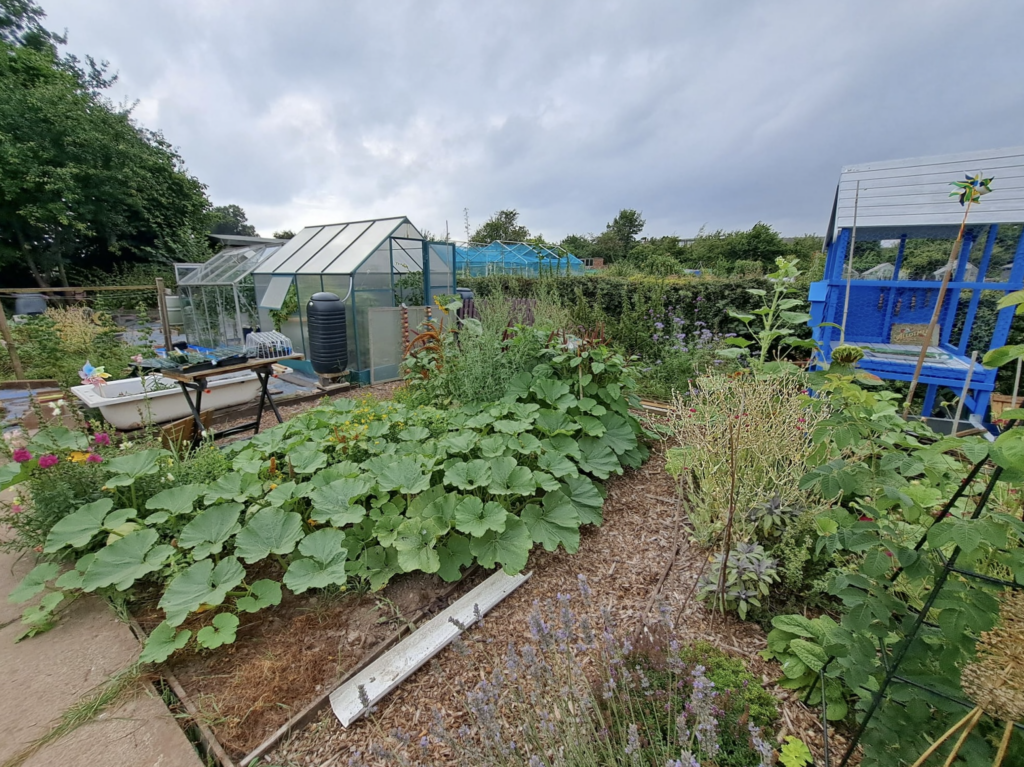
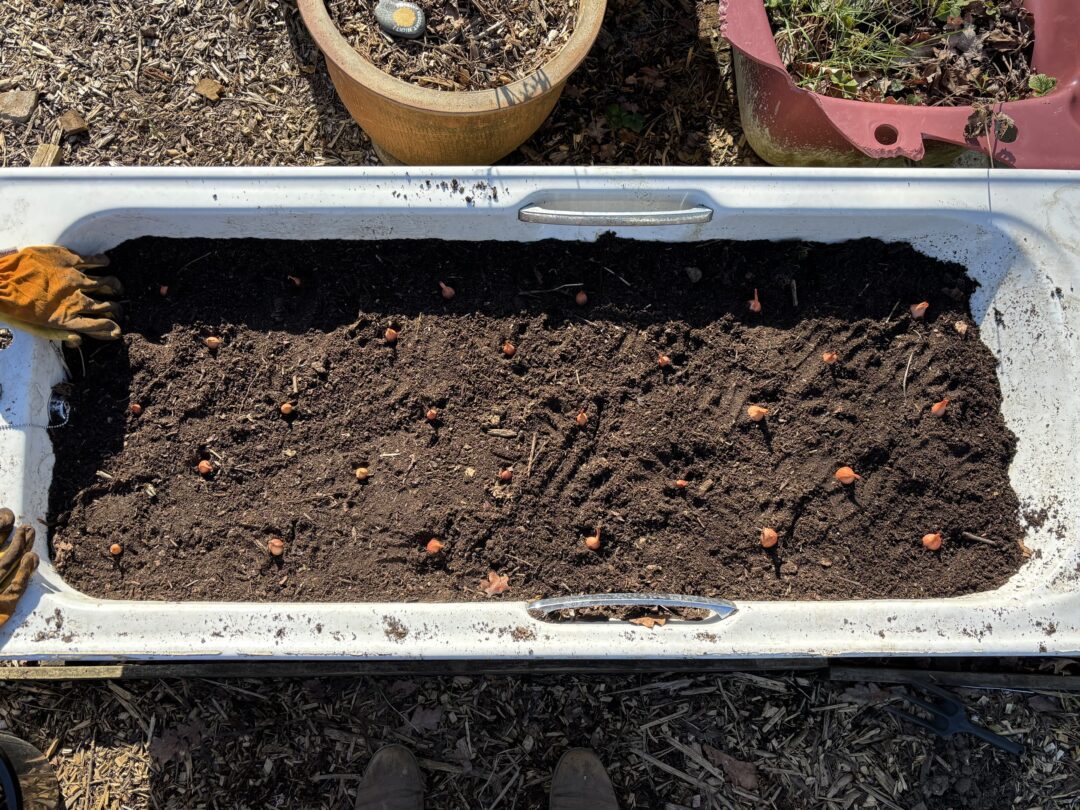
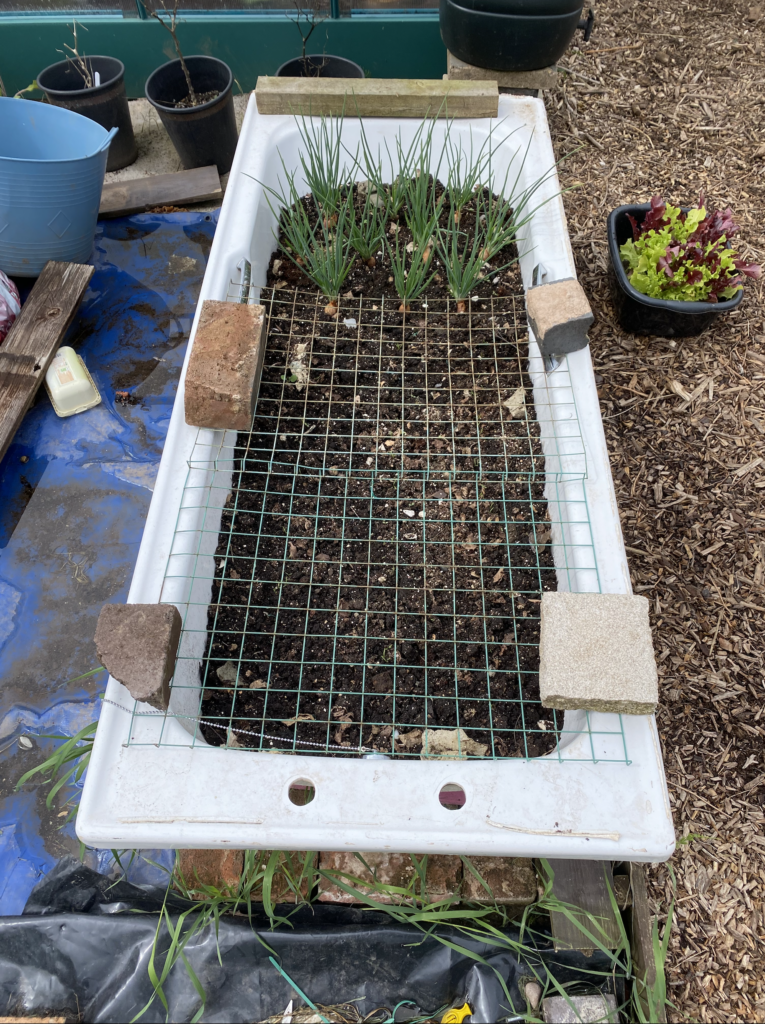
During this time I was given a free acrylic bath tub. I took it to the site in a wheelbarrow and set it up on a base of bricks to raise it from the ground. I drilled holes in the bottom for additional drainage and filled with a mix of coir, homemade compost, and horticultural grit and sand to get a fine mix suitable for carrots. This is positioned near my greenhouses, so to finish this area I laid more wood chipping for an additional path nearby.
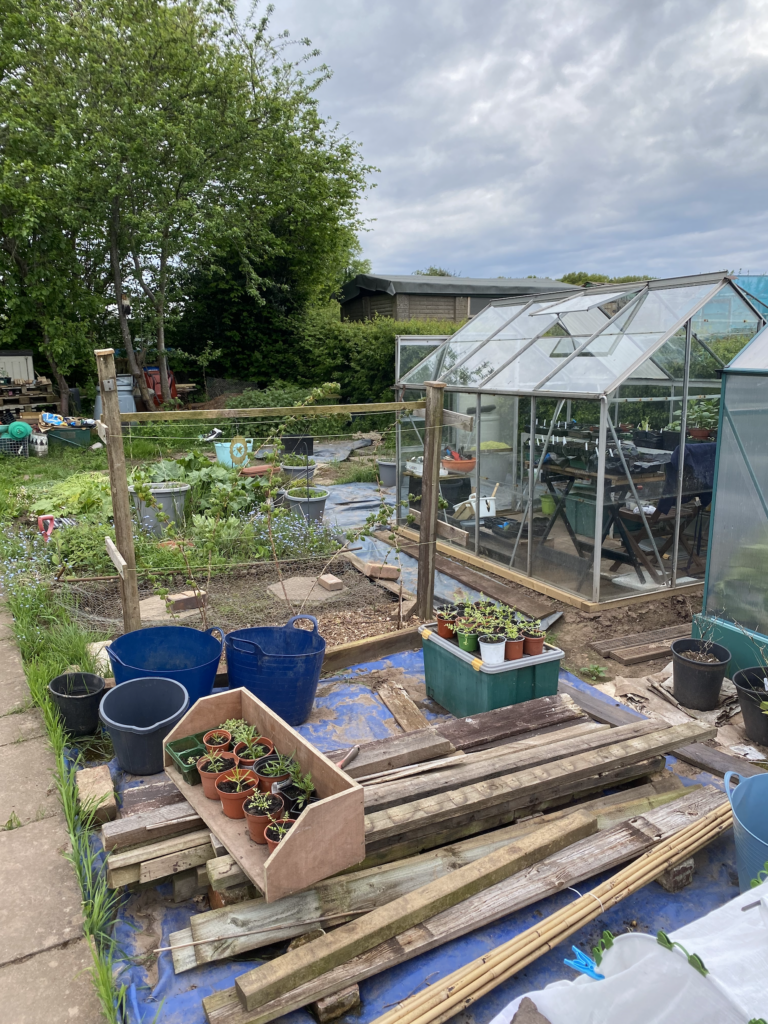
Once the ground was prepped for the greenhouse move I built a rectangular frame out of 2×4″ (100x47mm) timber to sit the aluminium frame on top of. I made sure to level this base frame so that the guttering would gently run rainfall in the direction of where I could setup waterbutts to collect it. Once I had removed the glass panes, door and window from the greenhouse it was really easy to walk it to its new position (with extra pairs of hands to keep the aluminium frame straight).
This glass greenhouse is now positioned next to the polycarbonate greenhouse I built in spring 2023, both in an east-west position to maximise winter light. The glass greenhouse used to get tree shade in the afternoon year round, but now it should only get shade in the pm mid September to March.
Another job I did in spring was to plant more rhubarb and dig up my raspberry canes to make better job at planting them. However the raspberries didn’t do very well this year. My guess is they have root rot or otherwise struggled with the wet. So I might just start again with new canes from a neighbour and make a new patch elsewhere.
My nemesis, couch grass
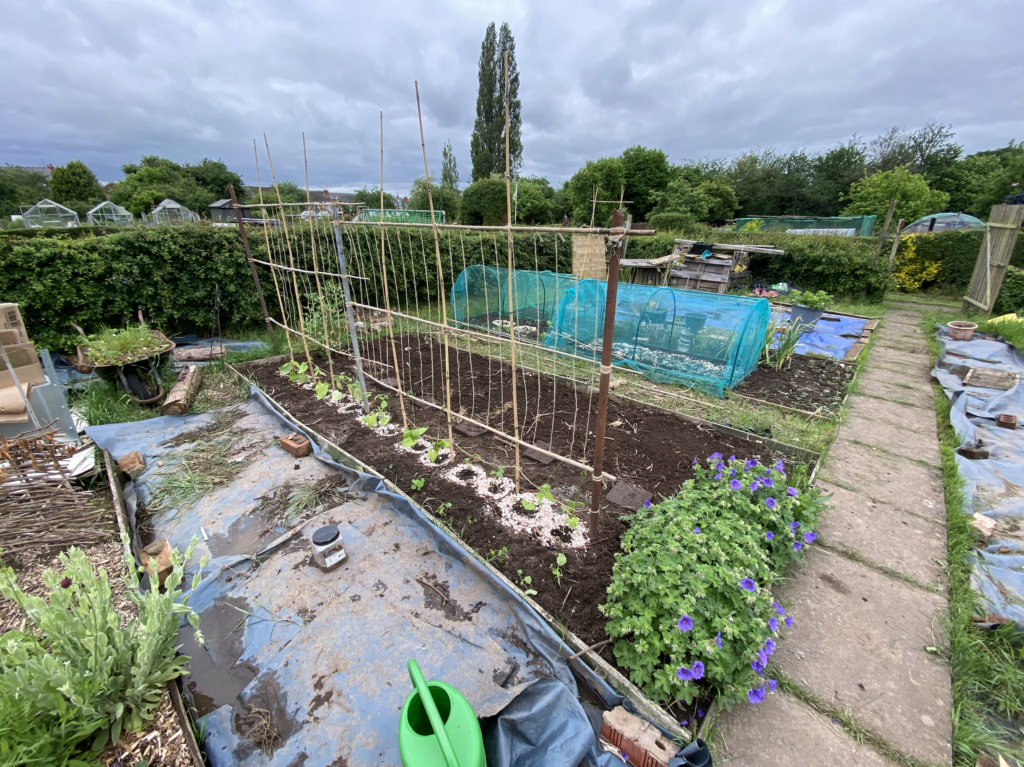
In spring I also rearranged the siding for one of my 2×4.5m beds as couch grass had overrun it again. I use second-hand wood to build siding that I sink into the ground ~20cm to limit the rate of couch grass that grows into the bed during the growing season. Without this it’s impossible to weed out without disturbing crops, it grows and spreads through rhizomes at a very fast rate in spring. With the sidings I can concentrate on weeding out small pieces that grow from remnants in the soil and the limited amount that grows in from the sidings.
I haven’t found an elegant way to deal with couch grass yet other than to dig. No-dig doesn’t work as the rhizomes grow a meter long and have spear point tips that cut through organic matter like cardboard. If I owned the land rather than being under a tenancy agreement I could smother all the grass for two years to kill it off, but under my tenancy I have to have 25% of ground cultivated in the first 3 months and 75% after 12 months. I don’t use weedkillers or artificial chemicals, I know others at my site douse their whole plot with weedkiller every spring to kill all new growth off which I find grim. The beds that I have established with sidings now get a mostly no-dig treatment as I no longer have to dig over all the soil and instead just hoe regularly and use a trowel or hand-pull other weeds.
I leave 1m wide borders between my beds and the hawthorn hedge perimeter as a short grassy area where the couch grass remains. In bare patches I’ve been seeding white clover and other plants that I hope will compete with it. These boarders are vital for wildlife to have a home, so there’s always going to be some couch grass at the plot.
Slugageddon
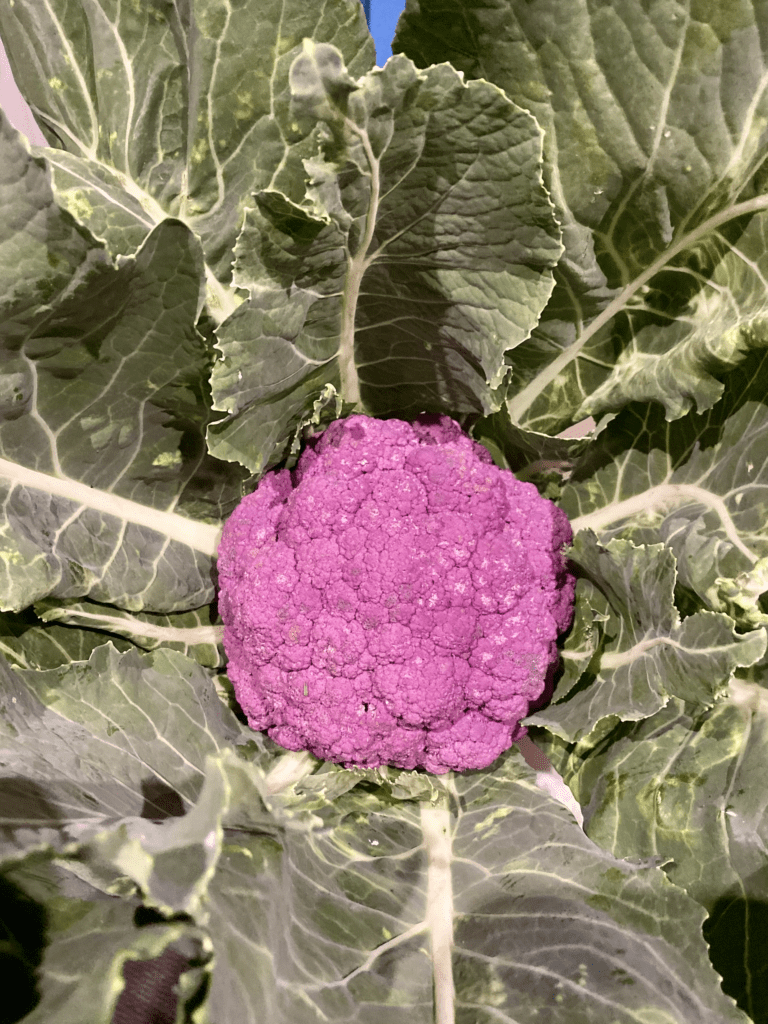
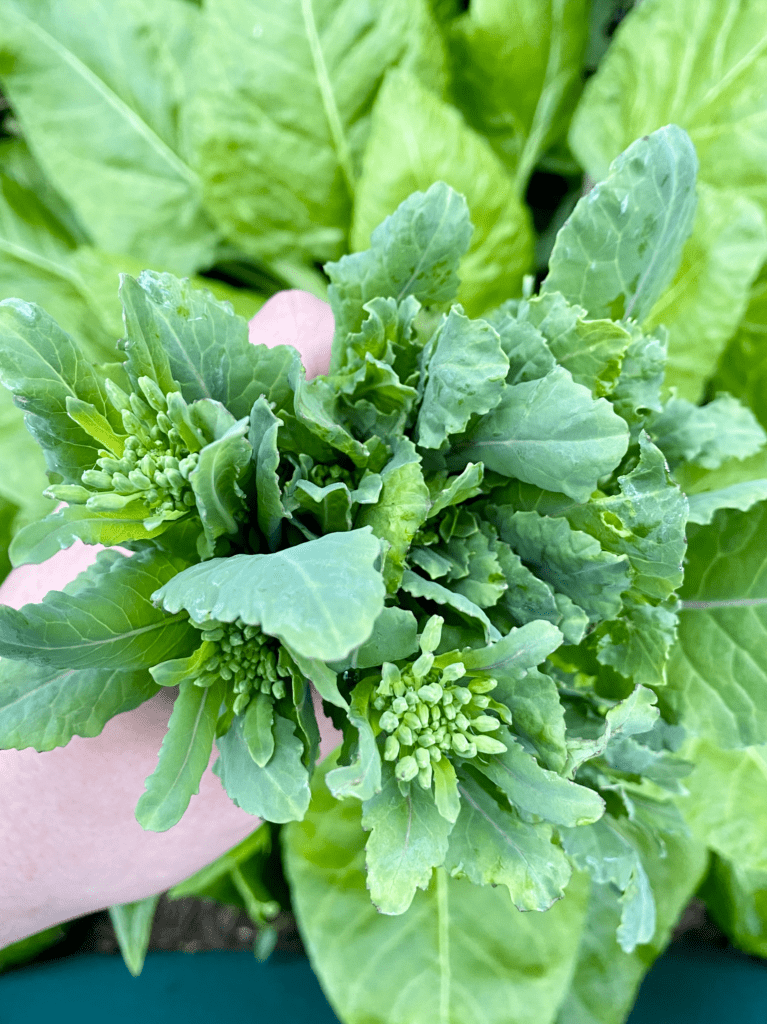
Slugs left me with only one cauliflower, one cabbage and two broccoli plants as well as no lettuce for most of the year. I don’t like using slug pellets and instead in my other two years have been successful using a combo of broken eggshells, dried bramble canes and slug traps. But the amount of slugs this year was relentless. My slug traps filled almost on a daily basis and didn’t slow down until mid-summer, and there was so much rain that often slugs would cross the eggshells (but not the brambles).
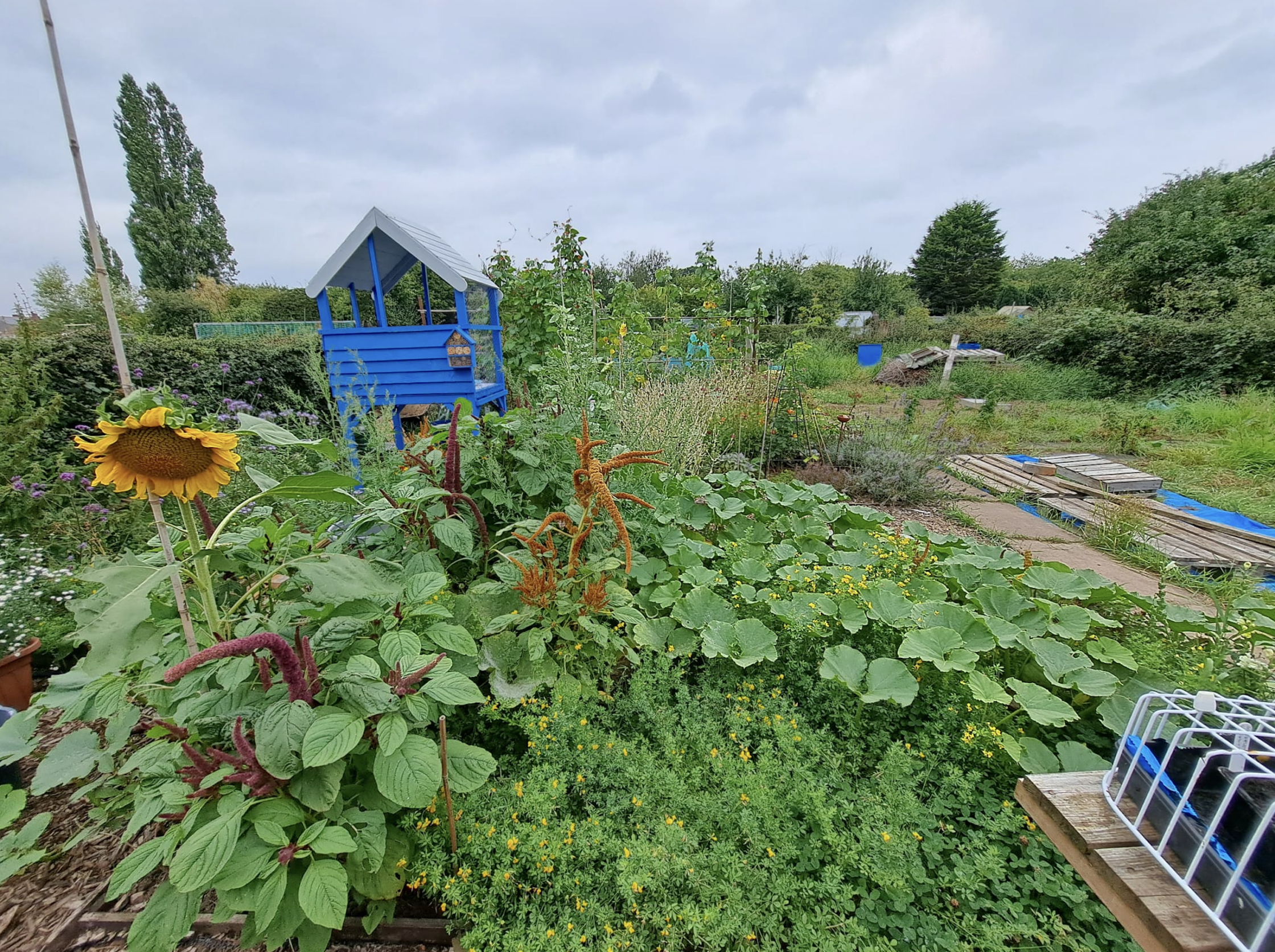
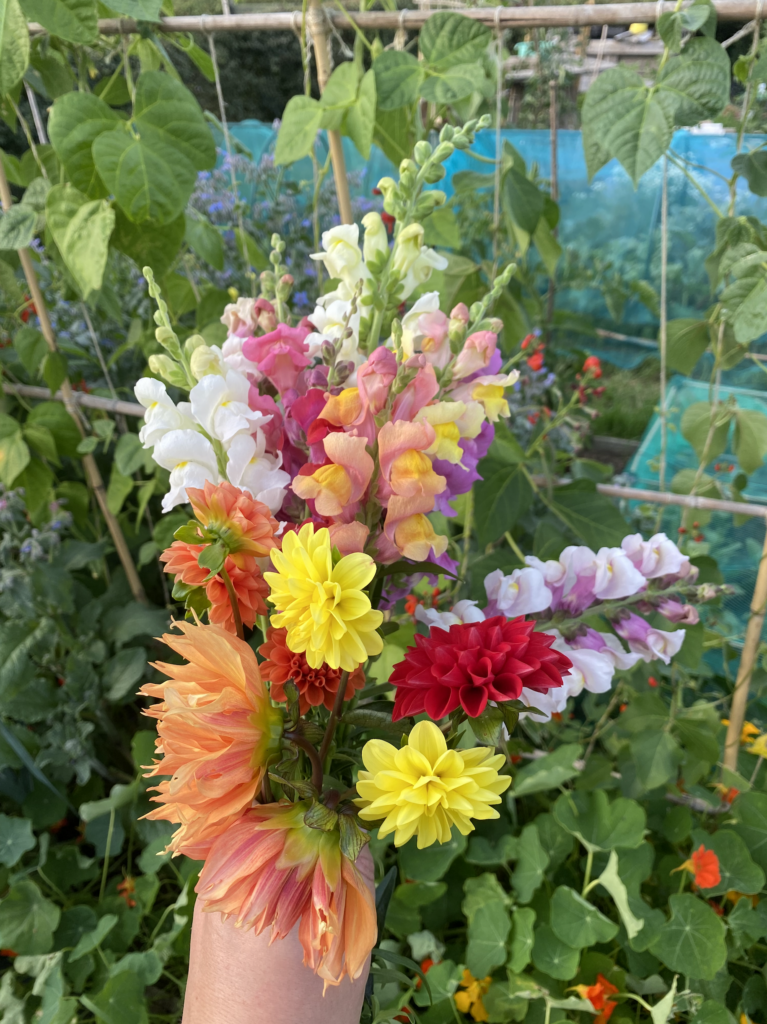
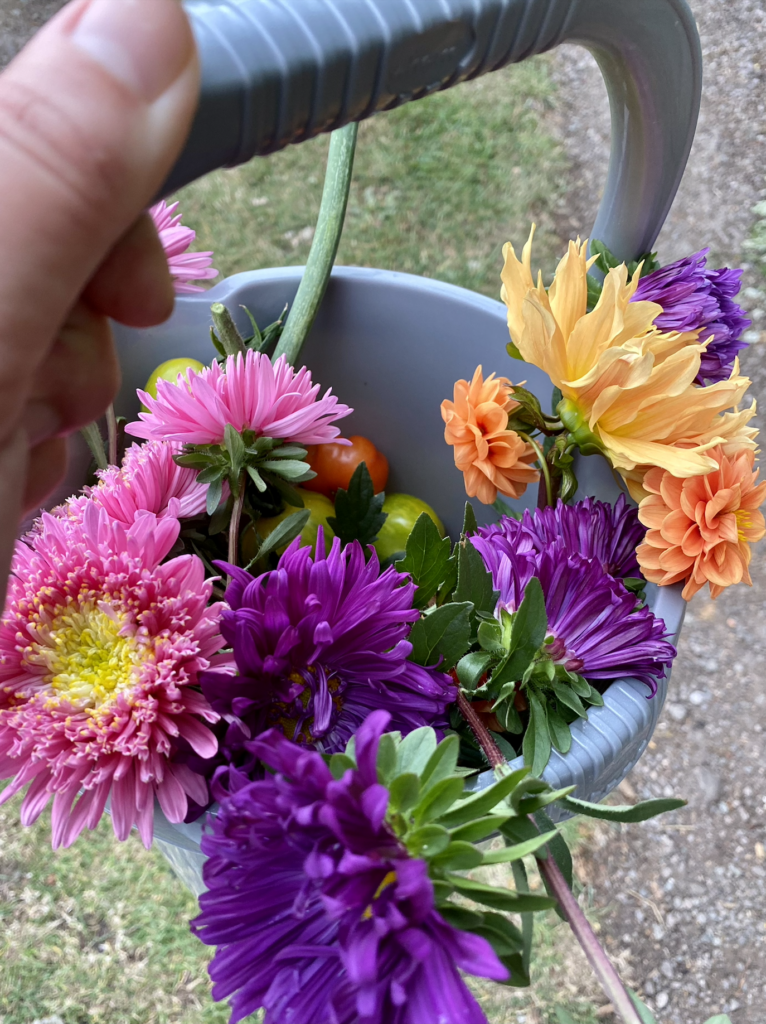
I ended up with gaps in my beds as plants succumbed to pests so I planted out way more flowers than expected (originally I was going to give some away). Dahlias, snapdragons, poached egg plants, achilea ptarmica ‘The Pearl’ and asters (all grown from seed) filled most of the gaps. Any other gaps had nasturtiums direct sown or were filled with radishes and beetroot. Two attempts at courgettes got eaten so I just filled their space with birdsfoot trefoil next to my two winter squash plants (which made the bees happy).
Absent neighbours
The neighbours that shared the same plot (we had half a standard plot each with a shared gate) have been absent this year. Over the past 18 months or more they’ve brought random bits and bobs up to the site but haven’t done any cultivation or growing bar a few tomatoes in their greenhouse. Instead of taking the proactive decision that allotmenting doesn’t fit into their lifestyle they decided to go to war with the committee after receiving warnings and final notice letters. Making all involved miserable by the sounds of it.
Their absence meant their side of the plot became a haven for pests with long grass and places to hide. Weeds were also more of an issue for me this year as seeds were easily windblown onto my side. I had initially cut their grass to help both them and me in the early months of them not using / maintaining their plot, but when it became obvious they weren’t going to return I stopped. When the grass and seeds were at their highest was when full war between the neighbours and committee was ongoing. Allotmentors love gossip so every time I was at the plot I’d have people stopping by asking what was happening with the other half. I hate drama so I tried to stay low key about the whole thing and focus on the gardening side of allotment life.
After a drawn out mess the neighbours have given up their plot as of a month ago. The whole thing has added stress to me not just from the impact on my growing space but that the neighbours would send me weird out of context rants over WhatsApp about the committee or how crap the allotment site is. The few times I saw them in person they did the same complaining at length with no action taken to actually enjoy their allotment space. They never directly blamed me for anything but they were very paranoid, sometimes inferring I had a better half or that their things had gone missing (none of which was true). A lot of this was happening while I was travelling back and forth to hospital to visit a close relative undergoing treatment. I was relieved when the neighbours had finally given their key back to draw a line under that particular source of stress.
Perennial flowers
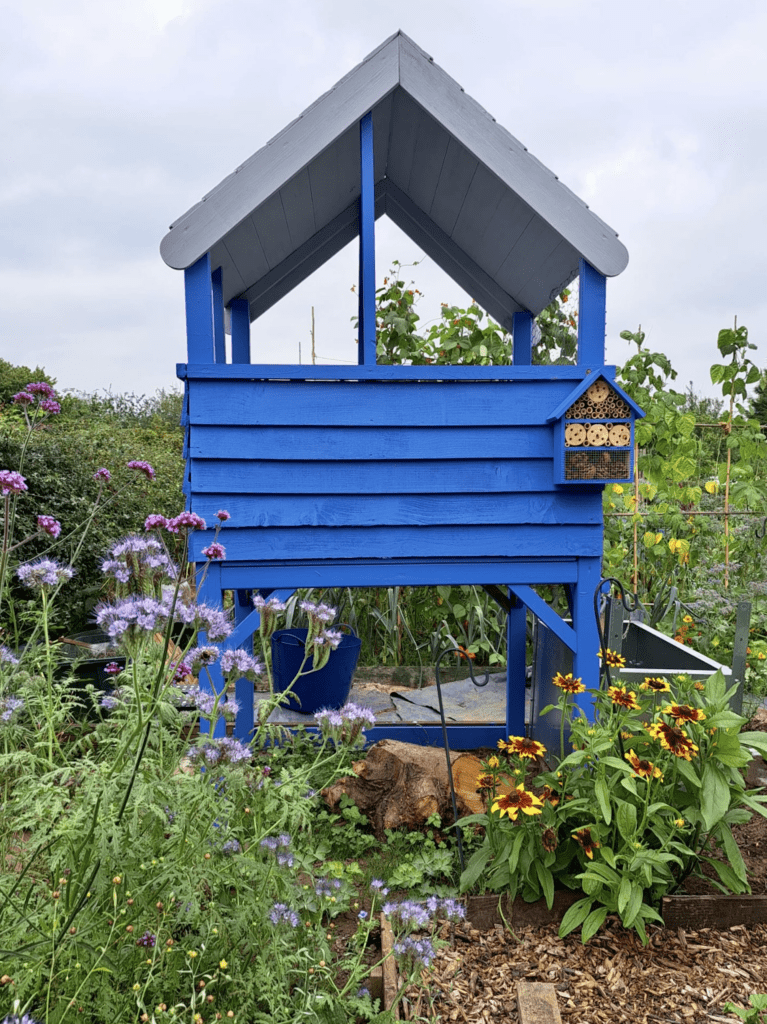
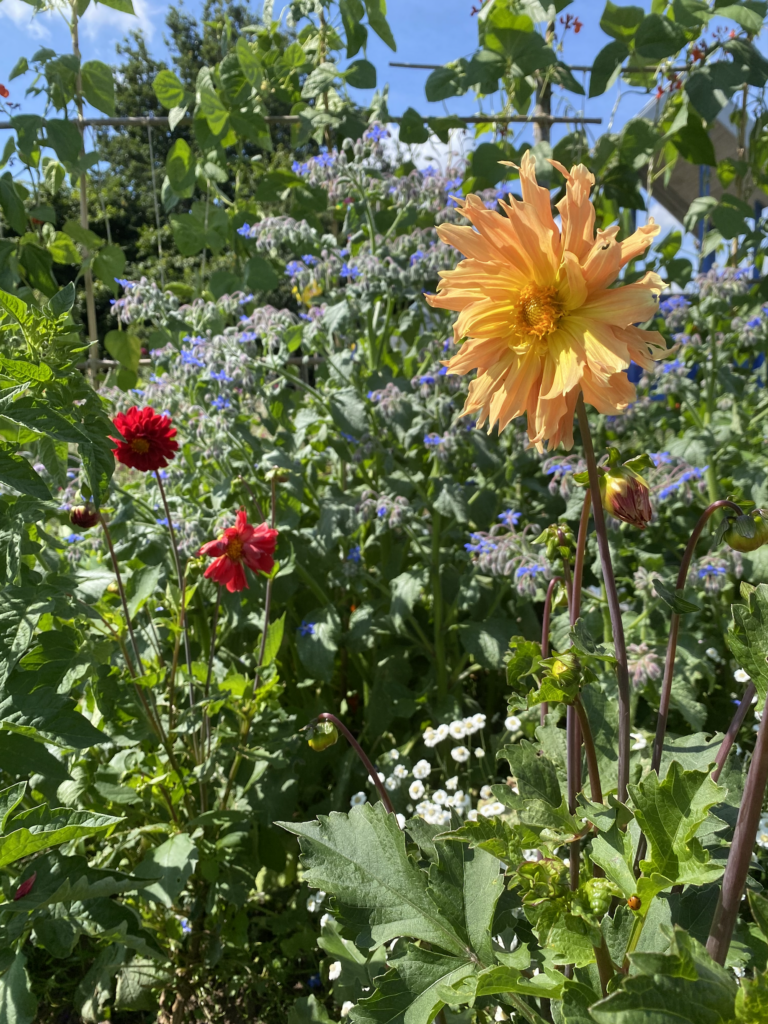
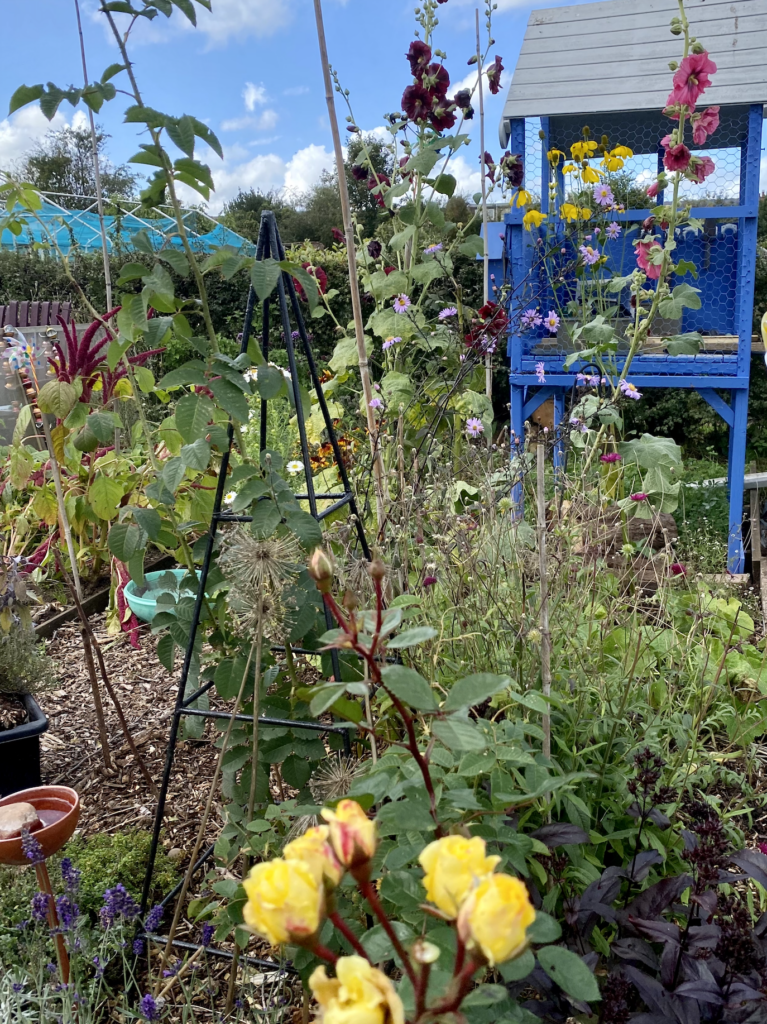
I’ve been attempting to establish some perennial flower areas. My last blog post from the end of 2023 showed part of an L-shaped bed which I had planted up with perennials and biennials. I continued to construct the last part of the bed, added a pile of logs, transplanted foxgloves, and in early June direct sowed annual wildflowers. The wildflowers never appeared, mainly because a family of field mice had a feast. The rest probably got hoovered by slugs. So mid summer I transplanted tall verbena plants and scattered phacelia seeds which did well and filled the space.
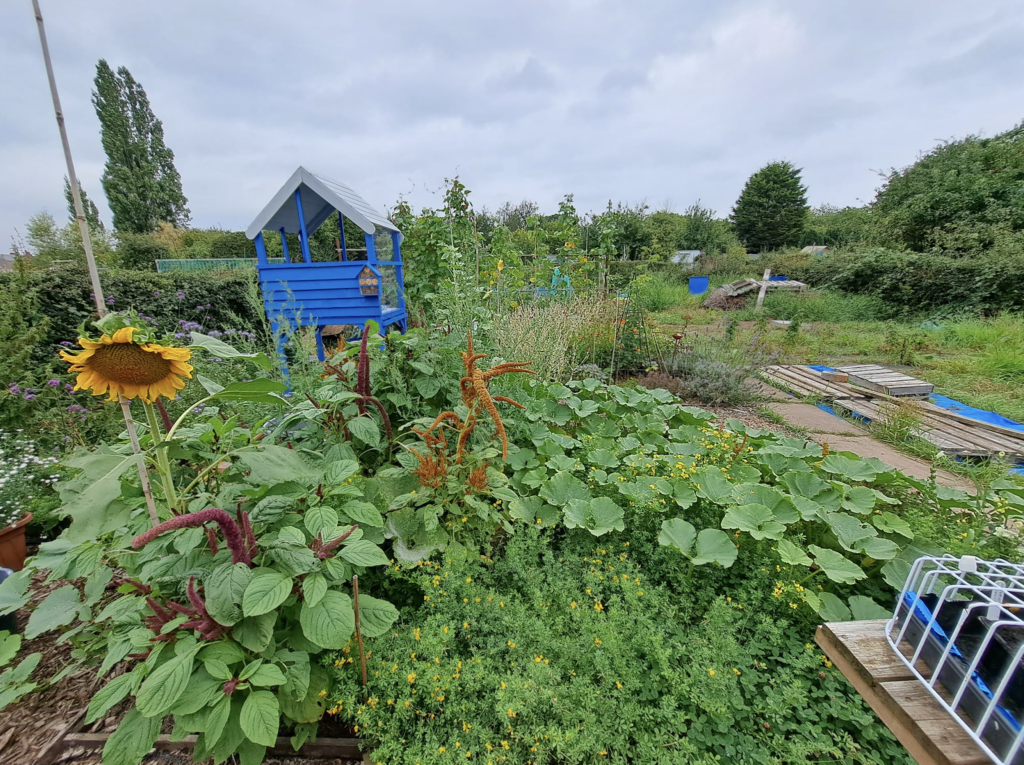
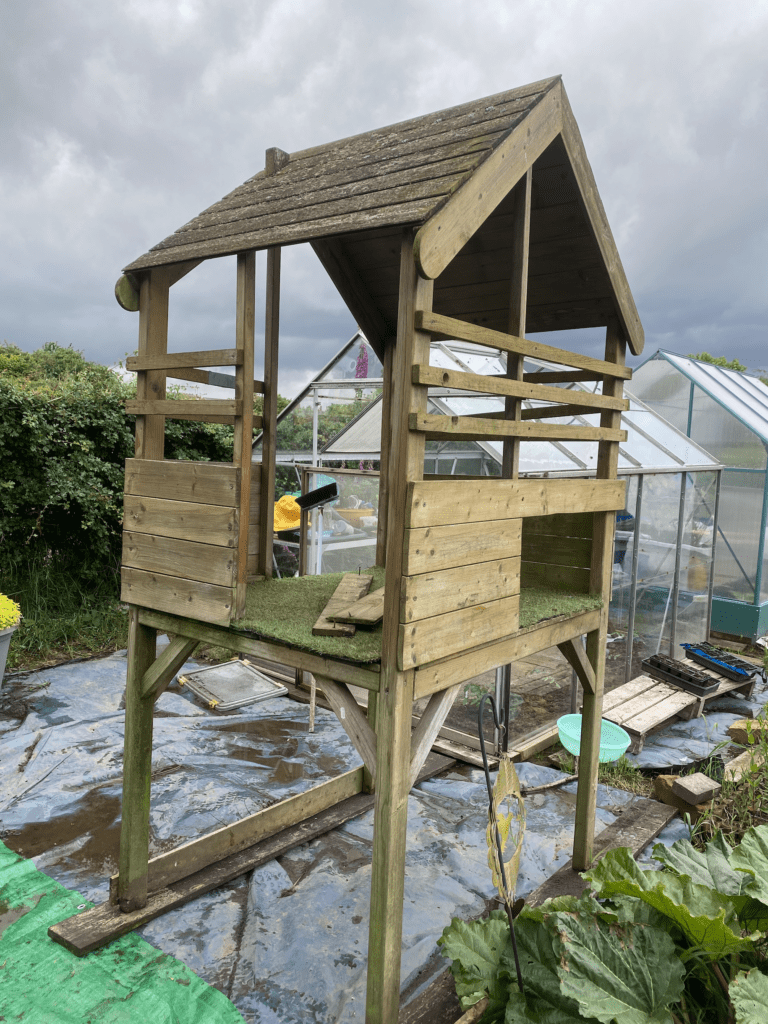
The absent neighbours at some point brought an old wooden kids playhouse thing to the plot. It was there at least a year slowly looking worse for wear. I asked if they didn’t have plans for it could I have it, and they were happy for me to take it off them. The raised floor of the playhouse was the right height for me to be a workbench, so I replaced the wood on the sides, fixed the roof and gave it a paint job. Its new home is on the corner of the L-shaped bed. It gives me some vertical height if I ever want to grow anything up it and one side is now home to a solitary bee-house in a south-facing position.
I have tall asters, mid height rudbeckia, lime green aquilegia and a hip producing rose I’ve grown from a cutting as new additions. I’m growing primula bulleyana from seed which will hopefully germinate over winter and spring. I’ve also grown hidcote lavender from seed and I’m hoping to get them in the ground this month to form a row in a sunny position at the front of the plot.
Edibles
It all looked quite chaotic but (after I reined the slugs in) I had lots of healthy produce even if it wasn’t what I initially planned for the year.
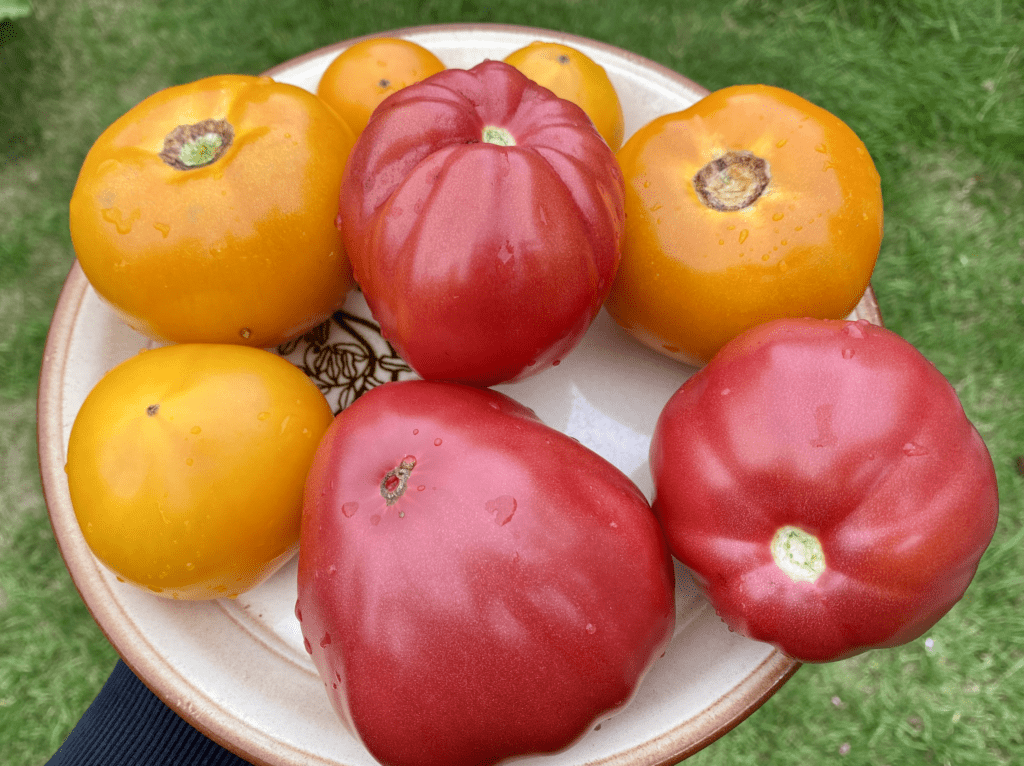
Weirdly my tomatoes did way better outside than in the greenhouses. I planted earlier outside which likely helped them. But I confused other allotmentors with huge outdoor plants while everyone else was struggling with outdoor crops.
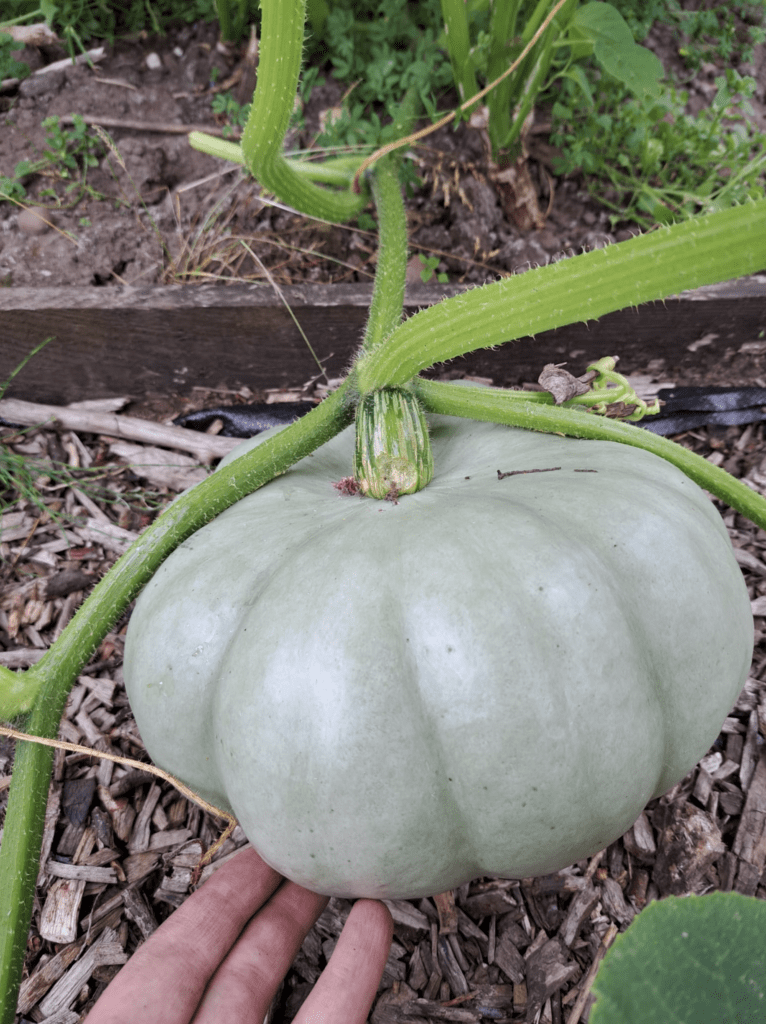
Underplanting my winter squash plants with birdsfoot trefoil seemed to benefit them and made weeding much easier for me. As I already said two separate sowings of courgettes were destroyed by slugs so the birdsfoot trefoil also took their place.
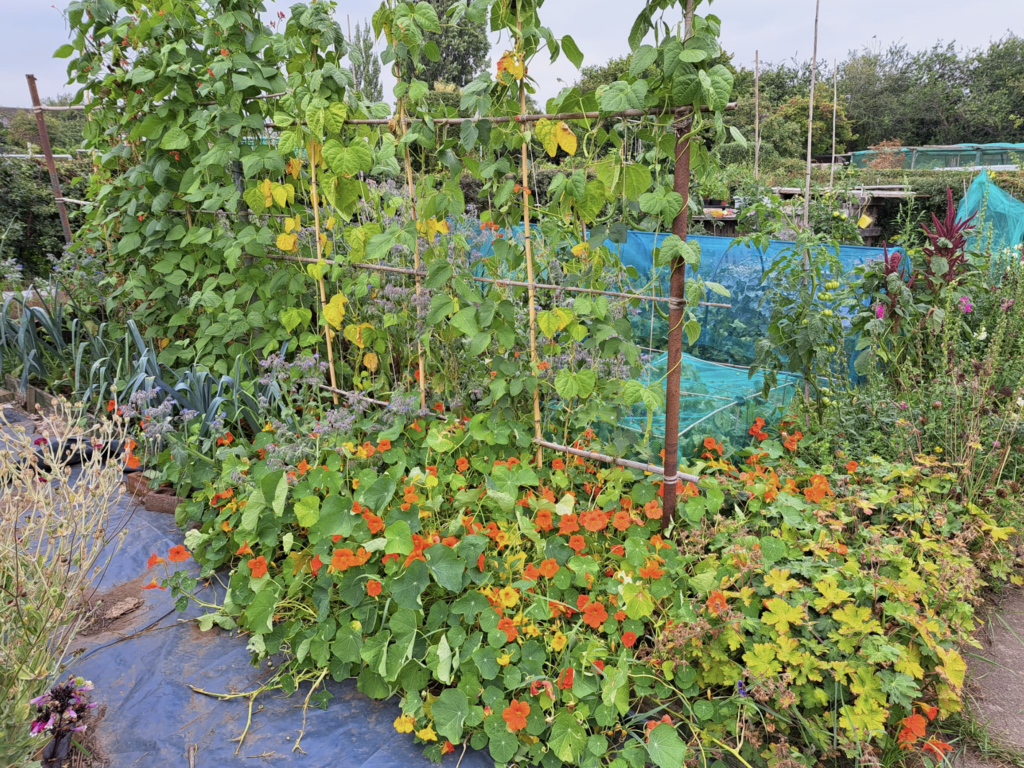
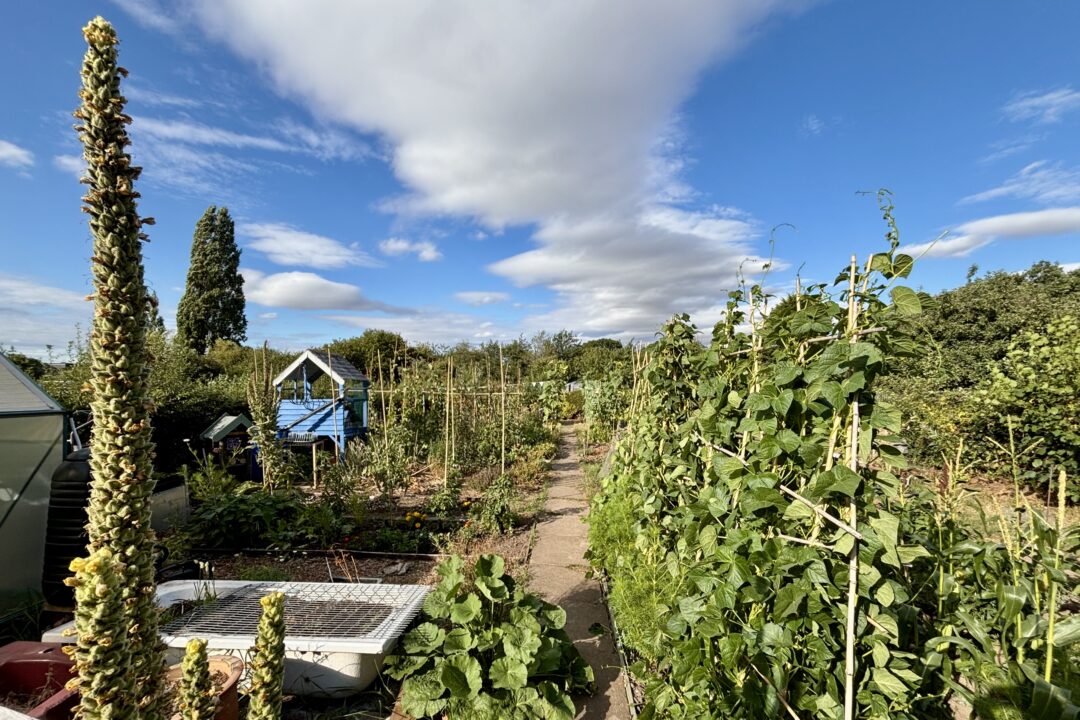
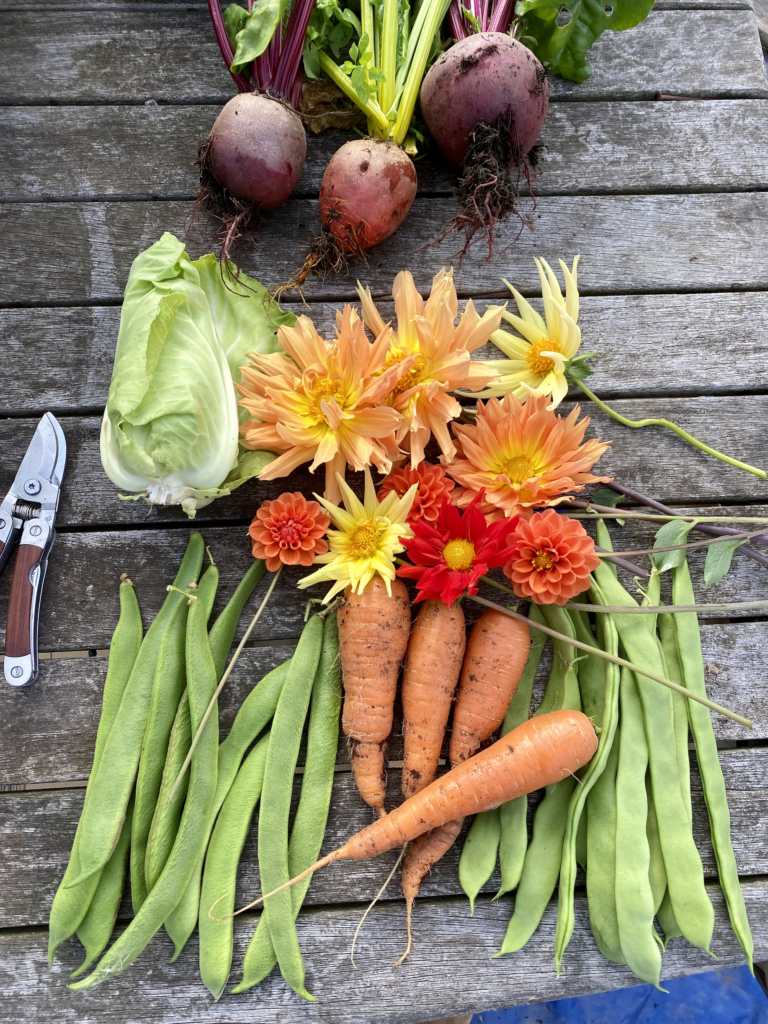
I had a lot of runner beans. Too many to fit in the freezer. I had a decent amount of French beans until mid summer. My borlotti were chaotic, with the packet from Sow Seeds giving me both dwarf and climbing plants. All of the beans were much harder to germinate this year which I assume was down to poor weather conditions including overcast days.
It was my first year growing amaranth for grain and it did really well. I got my seed from Real Seeds who are amazing – all their varieties can be grown from saved seed and they give instruction sets with all seed on how to save them. The amaranth variety is an early flowering variety cultivated to grow well in the UK, so you should get a good crop of grain before the season ends.
I had loads of strawberries. Other people seemed to struggle with theirs but somehow mine did great despite the lack of sun. The family member that was hospitalised had a heavily controlled diet through their treatment and they were sad about missing strawberry season so I found a bunch of ways of preparing them to fit their dietary needs or preserving them for when they were better. This included experimenting with strawberry juice and sorbets which turned out amazing.
My two aubergine plants were sad this year, lots of leaves but only four fruits total (although a large variety) with hand pollenation – lack of sun was probably the culprit as feed shouldn’t have been an issue. By contrast my two cucumber plants grew like triffids and gave me well over 60 fruits. But they were crystal lemon variety which I don’t actually like to eat, I just had seed left over and grew them. I gave most of them away, but it makes me want to try growing pickling cucumbers again given I seem to have found the right way to grow cucs.
I grew golden beetroot for the first time this year as I wanted to use them in recipes where I didn’t want the resulting dish to look like a murder scene. I made a bunch of really good vegetarian pies with them, a particular favourite was a butterbean, leak, parsley and cheese pie.
I grew some insane leeks. They were massive and carefree, growing in a little row in front of my largest bean frame. I cheated and got seedlings from a local nursery and will definitely cheat with them again.
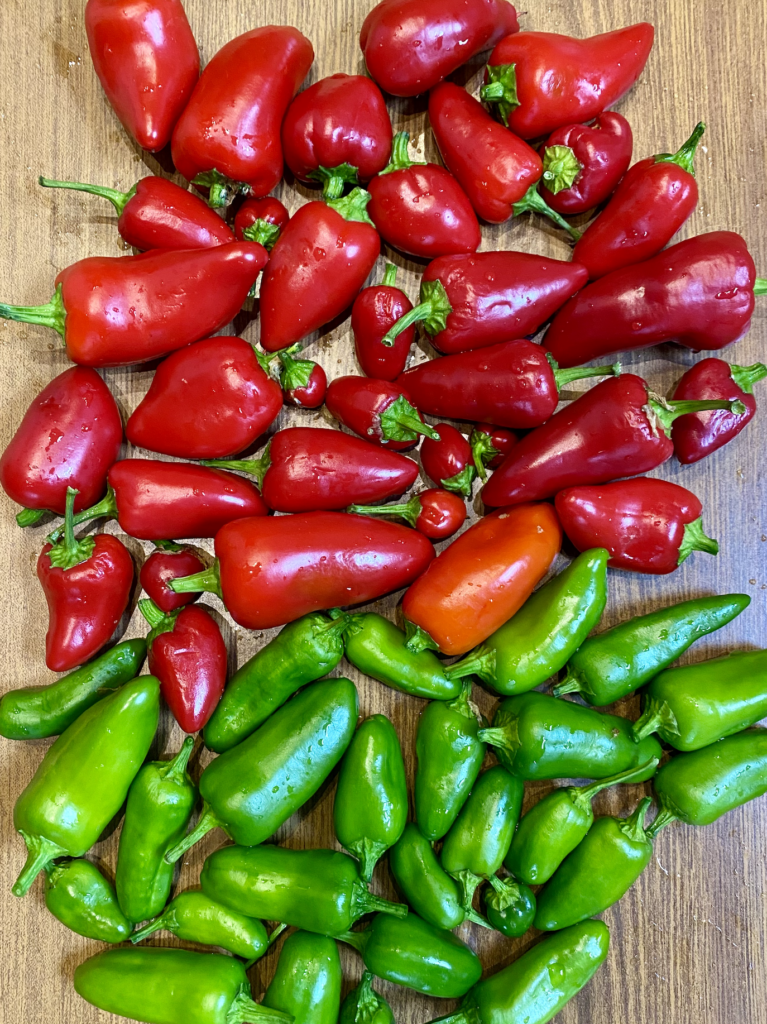
I had four chilli plants in the glass greenhouse: two Nigel’s Outdoor from Real Seeds, one Trinidad Perfume (no heat variety) from Kings Seeds and one Bulgarian Carrot / Shipka from a plant swap. They were all very prolific. The Nigel’s Outdoor began flowering first giving them a longer season, the Bulgarian Carrot followed closely and the Trinidad Perfume took almost a month longer but still produced easily 60 fruits. The Nigel’s were way hotter this year than last year given in previous years I’ve grown them without protection (as they’ve been cultivated to be able to do so). I was well happy with the chillis and seeing them grow gave me a lot of joy. I’ve dried, frozen and pickled them. Made hot sauces and used them fresh.
I grew a bunch of new herbs. Huacatay is a herb used in Peru, Ecuador and Bolivia. It tastes of mint and coriander, and is a good alternative to coriander for those that get a soap taste from the leaves. (Slugs adored it though so I didn’t get much to crop.) Korean mint / agastache is a hyssop with a liquorice / aniseed flavour, and goes in lots of Korean cooking (I made a bunch of savoury pancakes). Salad burnet is a perennial herb with leaves that taste like cucumber, it can be used in salads or added to sandwiches before cucumbers come into season. Red shiso / perilla is a herb common in East Asian and Southeast Asian cooking. I had my first crop of dill leaves this year too, each year mine goes to seed quickly and I still don’t have the knack for it but I’ll keep trying.
Expanding my garden
After telling everyone who asked there was no way I’d take on a full plot once my neighbours left – I have taken on the full plot.
I have always been clear with myself that I don’t want to overstretch myself at the allotment, that everything I do in life right now is to better my health, and if an allotment gives more grief than joy then it’s not worth having. I’m at a place where I’m in control of my original half – I’ve contained or eradicated perennial weeds, have systems setup for managing green waste, water collection, enough greenhouse space, everything is working and I’m at a point of maintaining a garden rather than developing new unworked ground.
After the dust had settled with my neighbours leaving I was at a point where I was trying to envisage what my next year was going to look like. Over the past year on and off I had been volunteering my time on a social history project – maybe I’ll talk about that in another post – but I chose to stop, mainly because it gave me more grief than joy. And I don’t immediately have anything to take its place.
The committee head told me it might be a while before a tenant was found. Other plots have been let out and willingly returned within three months as newbies realise how much time and effort it takes, so there was every likelihood given the state of the plot it would take time to find a long term tenant.
And I’d ideally like more space for potatoes and to rotate crops. The temptation to have more perenial crops also beckons…
So it ended up being a combo of things that made me consider taking on the full plot.
I’m having two months free rent of the new half as it’s already paid up for the year, and during this time I’ve covered as much ground as possible in tarpaulin to smother out the grass and weeds. I need to finish some perennial planting on my existing side and then I’ll crack on breaking ground on the new half.
It’s hard work cultivating the ground and making the soil healthy but I find it really rewarding. My plan is I’ll evaluate where I’m at in six months and see how I feel about keeping the full plot. If I have reservations I’ll give the new half up at the end of 2025, and it’ll be in better condition than how it is now (so more likely to keep a tenant).
I’ve already put a potato order in at the site so I’m committed until at least I get them back out of the ground!
Other plans underfoot
I plan to put in two dwarf root stock pear trees at the front of my original half and I want to look into other perennial crops. I don’t want to invest too much money into the second half given I’m not necessarily keeping it long term, but a raspberry patch in full sun and maybe currants in partial shade would be good. I’ve been offered both autumn raspberries and golden raspberries, and someones’s keeping me aside a couple of tayberry and thornless blackberry canes, so lots of options on that front.
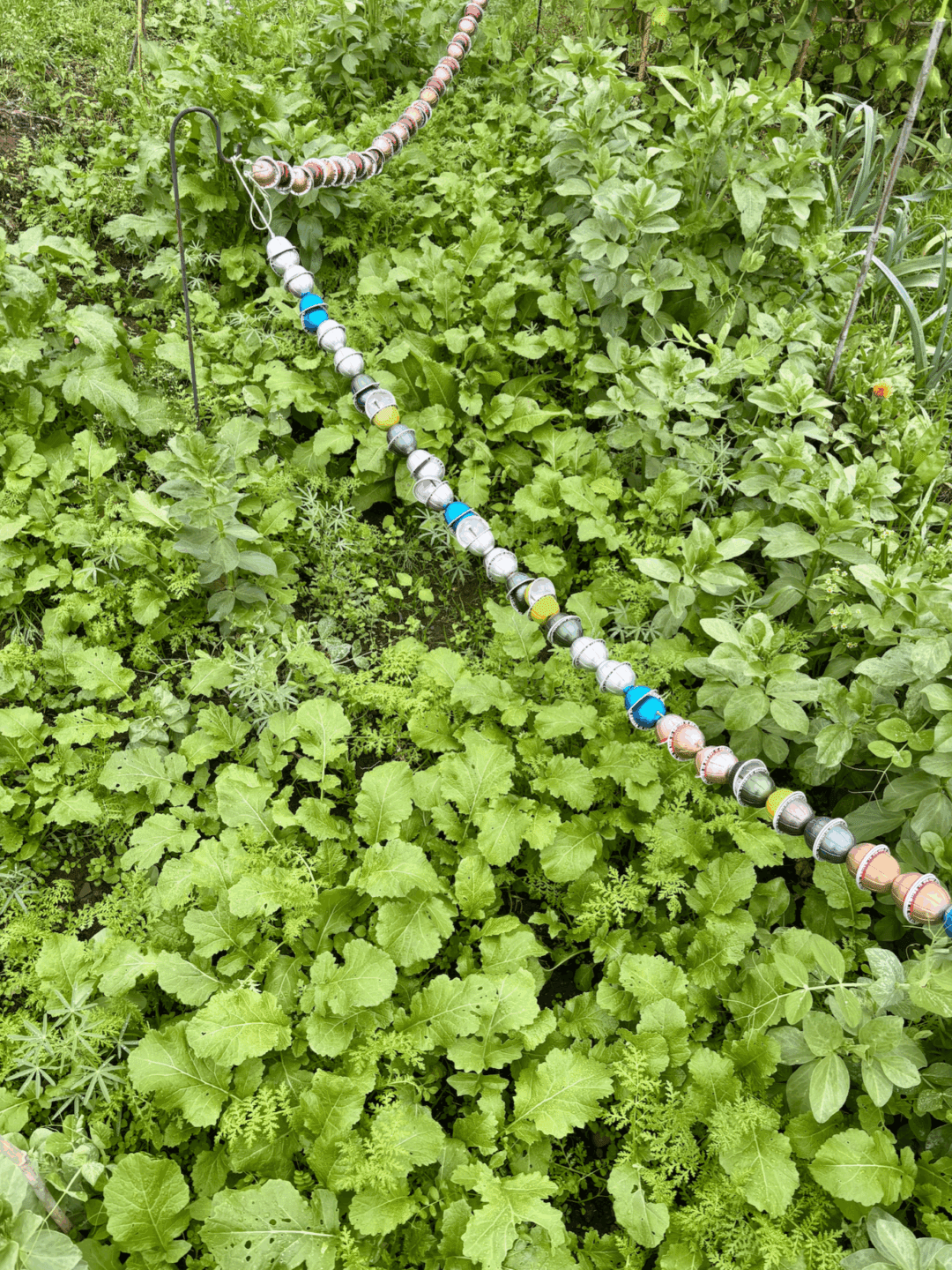
I’m trialing a few different cover crops / green manures: birdsfoot trefoil, vetch and rye, and field beans. I’ll follow up with a post early spring with how they’ve faired. I was too late to sow black winter radishes so I’ll use my saved seed next year instead.
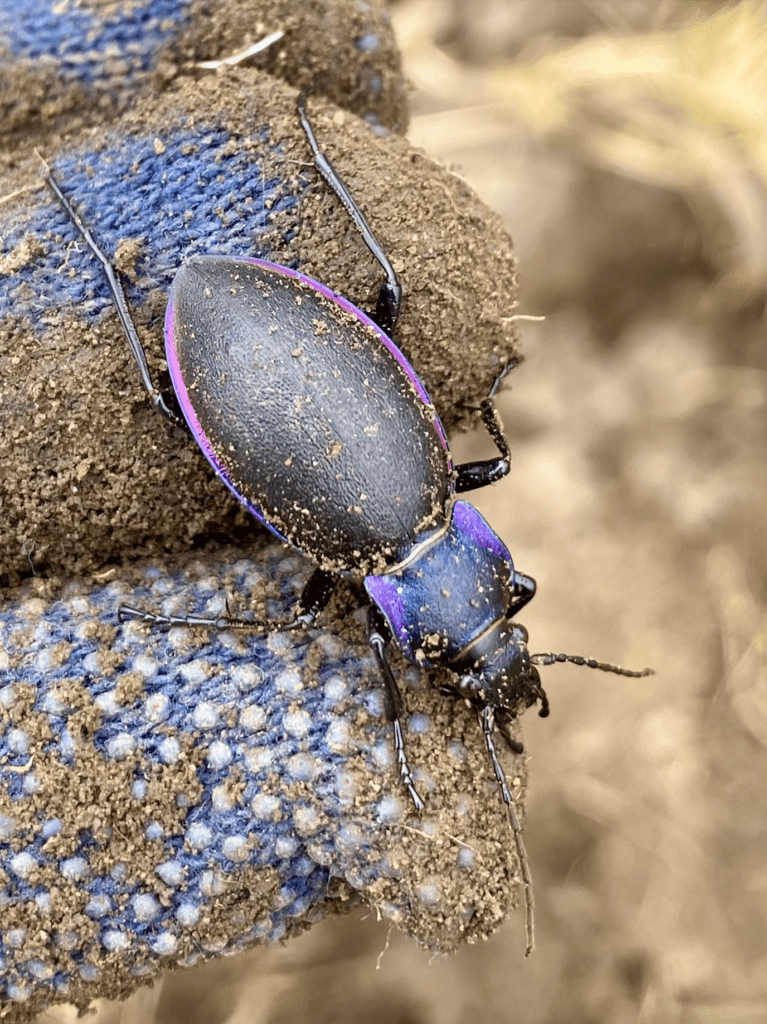
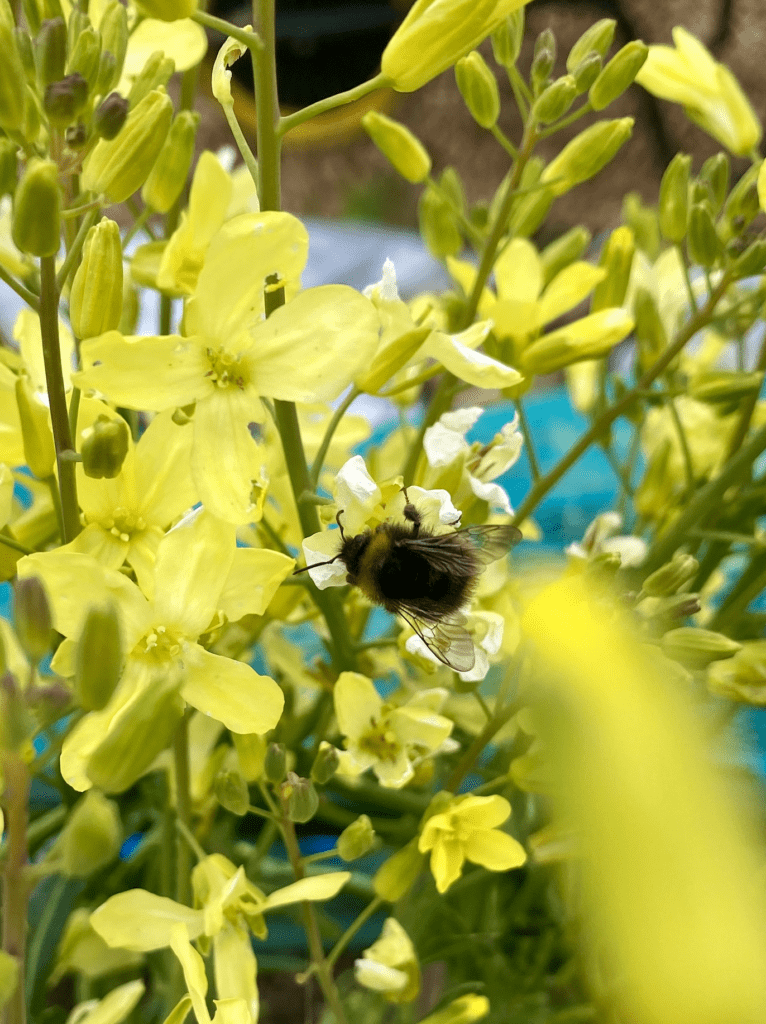
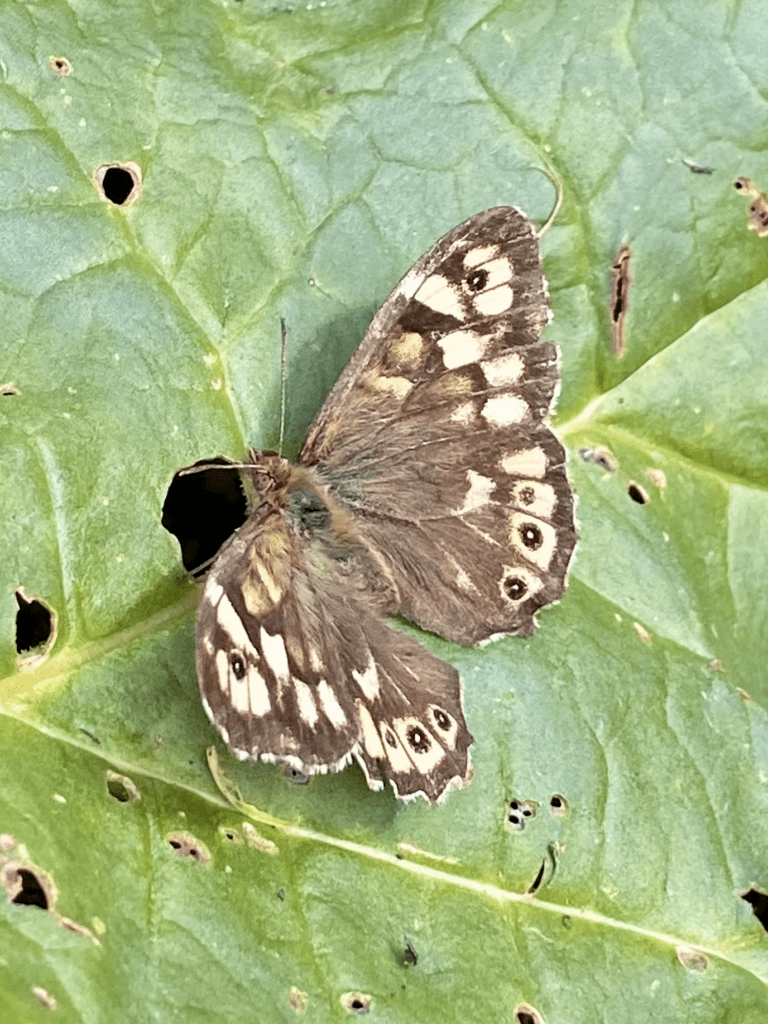
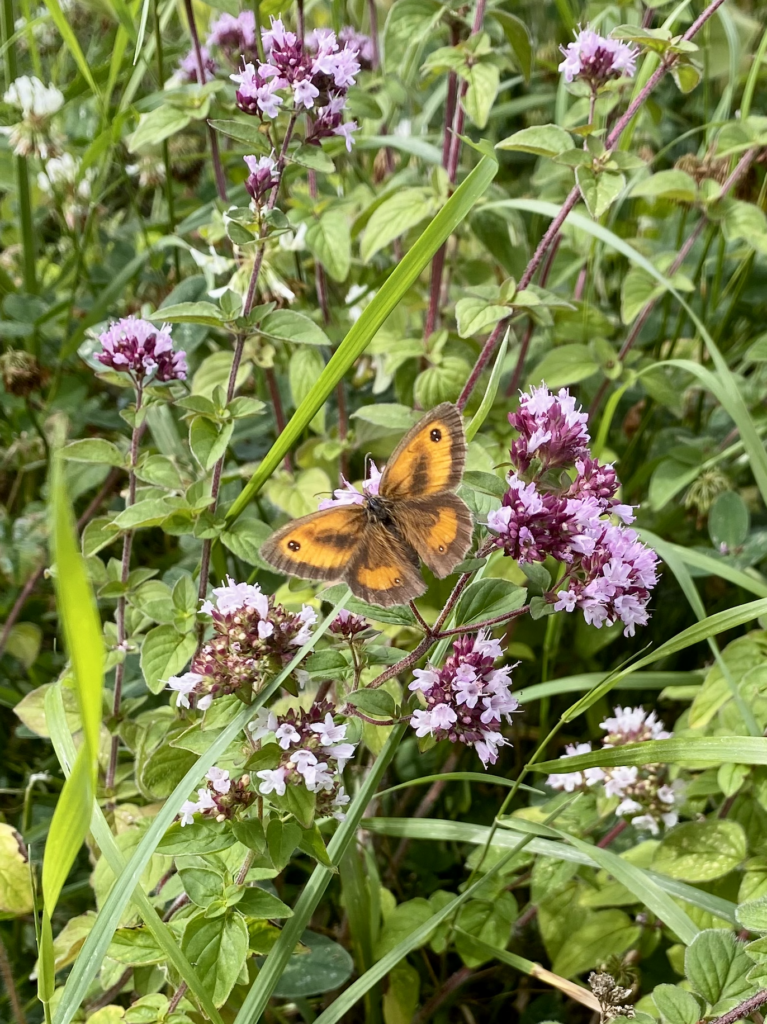
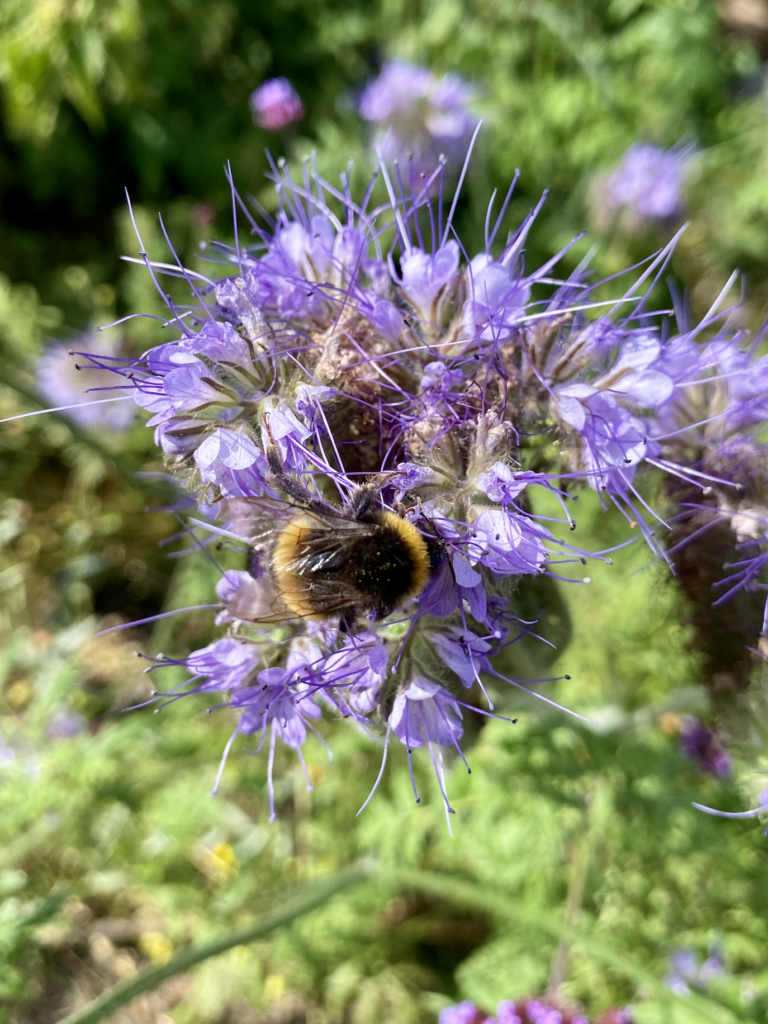
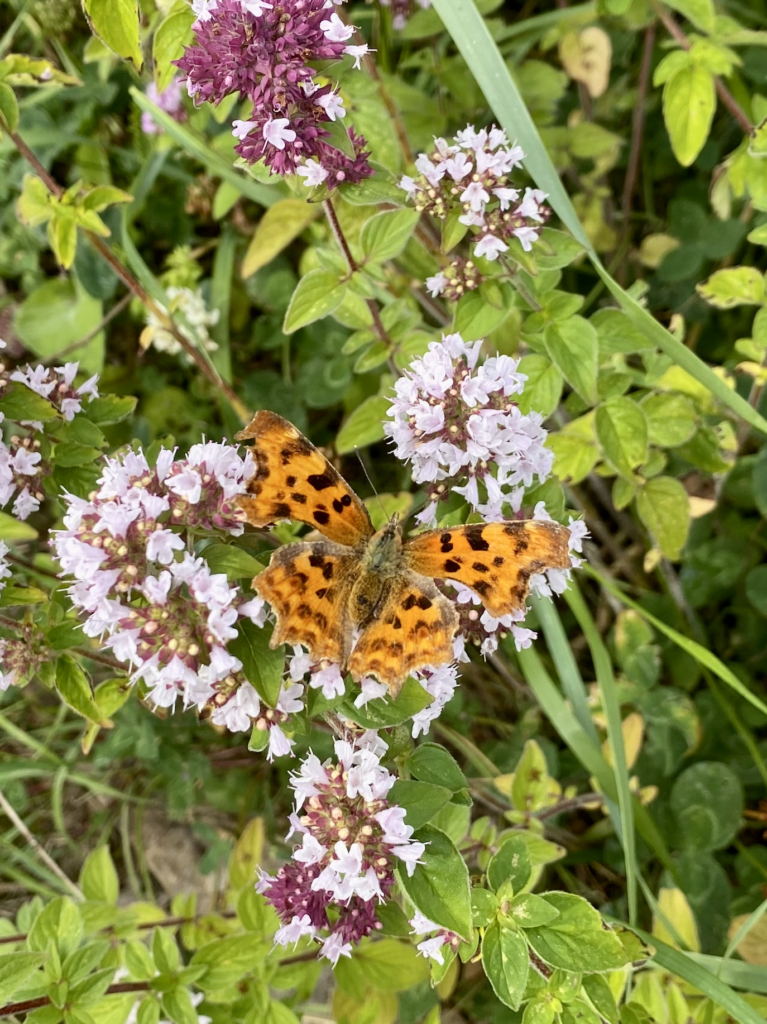
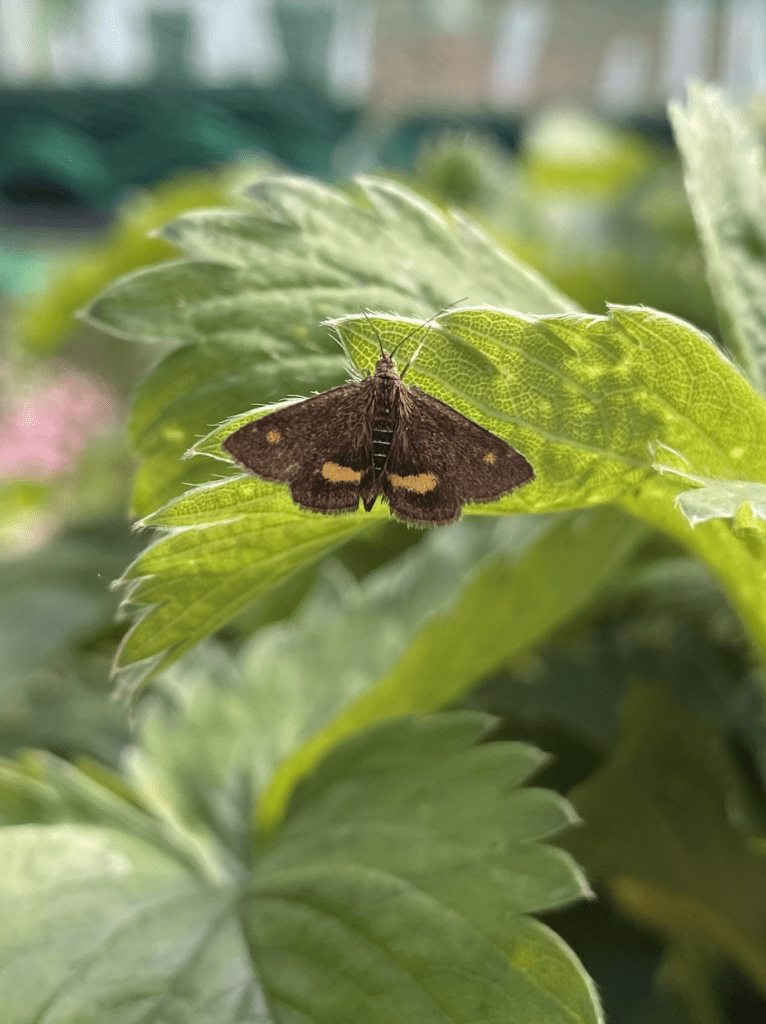
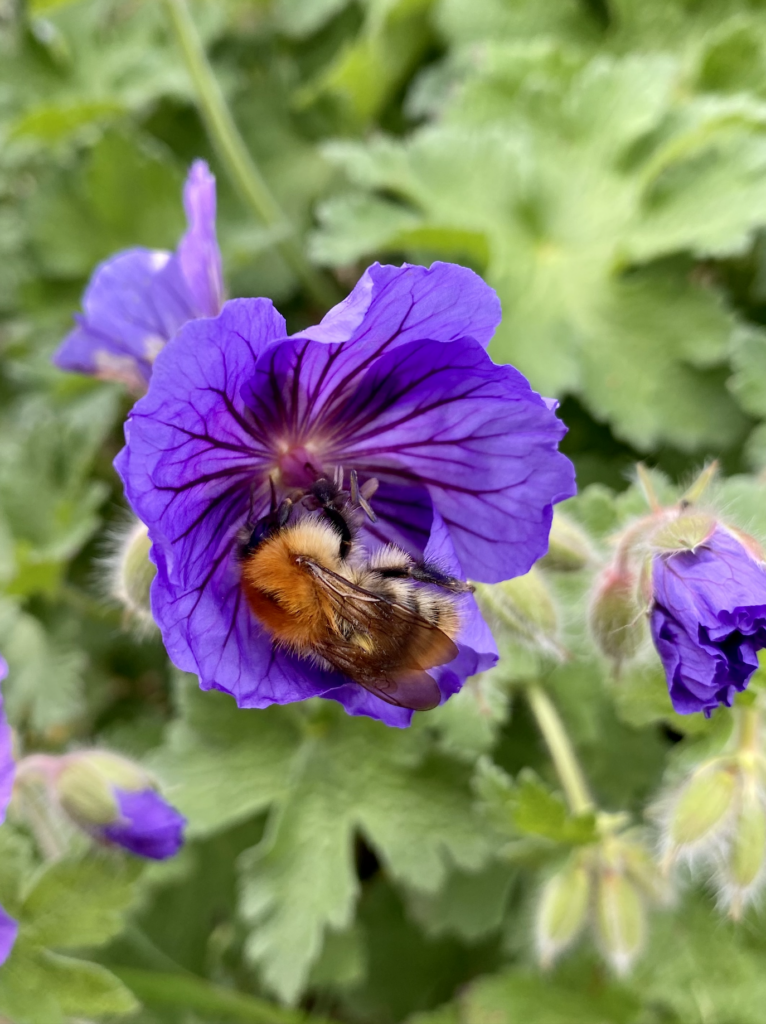
I’m keen to encourage ground beetles across the plot as they’re a great predator of slugs. I spot quite a few on my original half, but hopefully with the mini log piles I’m adding to hedge rows I’ll be able to encourage a larger population. I’m happy in general with the balance of wildlife on the plot, but I’m always mindful to make sure there’s plenty of space for them. I had loads of ladybirds this year, a large variety of solitary bees (once the long miserable spring ended), lots of small birds, more butterflies than previous years, damselflies, all sorts. So hopefully I keep seeing healthy populations in 2025.
And lastly before I close out, there’s slowly been younger allotmentors joining the site. By young I mean 25-45 in contrast to 75-95 year olds. For the first year you could count the people under 50 on one hand, and it’s a site of 50 full plots, many of which are split for multiple tennants. Many of these new tennants are women too, so it feels much more balanced. It’s great to have nice people more my age, and in general it’s a place with friendly likeminded people that I get to chat to on a weekly basis. It provides me with a greater sense of community and belonging which I really appreciate.
I’m planning out next year’s crops atm so I’ll do a separate post soon with layout plans and any winter updates.