I post regular allotment updates on Mastodon but I forget to turn that same info into posts on here. So over the next couple of weeks I’ll be running through some updates from the second half of last year and from the year so far to catch up!
Last year I expanded to a full plot after my previous neighbours left the site. I’ll talk in more detail about how the upsizing went in another post. But with more land to manage I have more space to experiment with green manures.
Green manures are a type of cover crop that is grown with the specific intention to be dug into the soil while still green to add organic matter and nutrients to the soil. They are used alongside or as an alternative to animal manure, hence the name.
In other years I’ve only used cover crops in small patches. I grew winter radishes over my first winter to add biomass and have regularly used clovers and birdsfoot trefoil at different points in following years for their ground cover and nitrogen adding qualities. I’ve found birdsfoot trefoil particularly useful for growing under winter squash, getting the seed going as early as possible and then planting the squash out amongst it so that the squashes tendrils and leaves eventual overshadow the cover plant. The birdsfoot trefoil flowers attract pollenating insects and its cover helps conserve water. If I have spare patches of ground between crops I grow calendula, nasturtiums, poached egg plants or white clover.
Because I had a half plot I used much of the cultivated ground throughout the year, using succession planting and growing winter crops meant I didn’t really have a need or capacity to use winter cover crops.
With now double the space I don’t want or need to grow winter crops and perenials over all the ground so I had a go at covering a section of the new half in green manures last autumn.
I asked back in July on Masodon what allotment folks’ plans for green manures this year was. A few different people responded but Broadfork‘s advice in particular on not being afraid to chuck a lot of different varieties together was helpful. I was worried certain ones would out compete others but they said it provides denser cover and the assurance that if one variety doesn’t work the rest will.
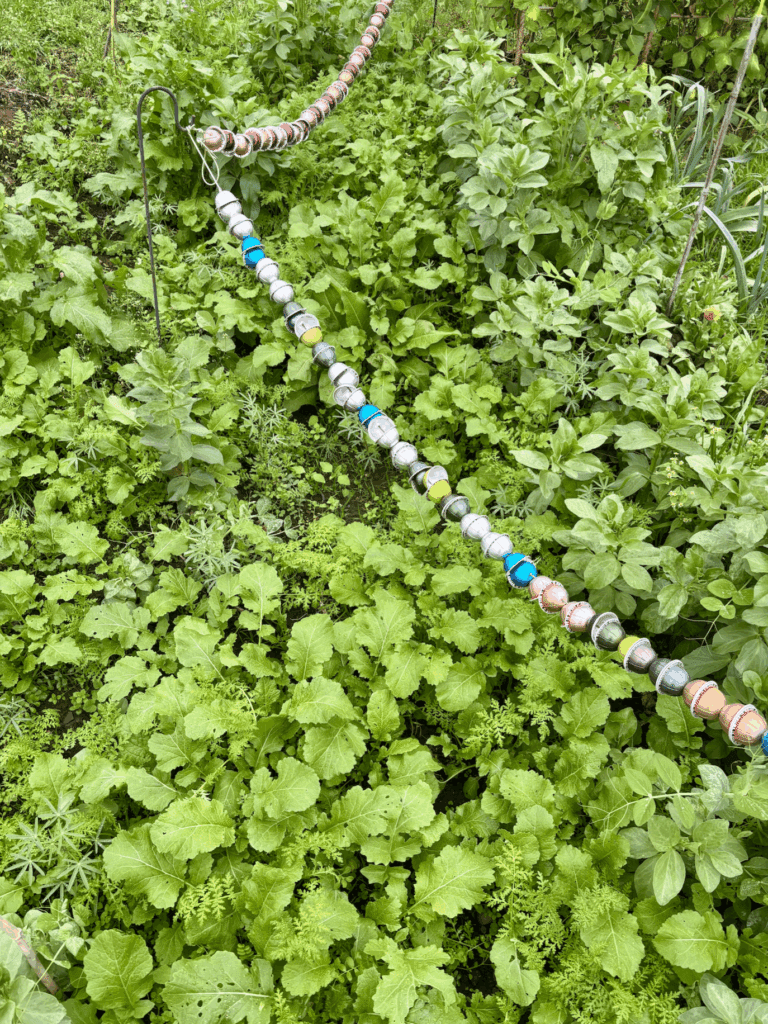
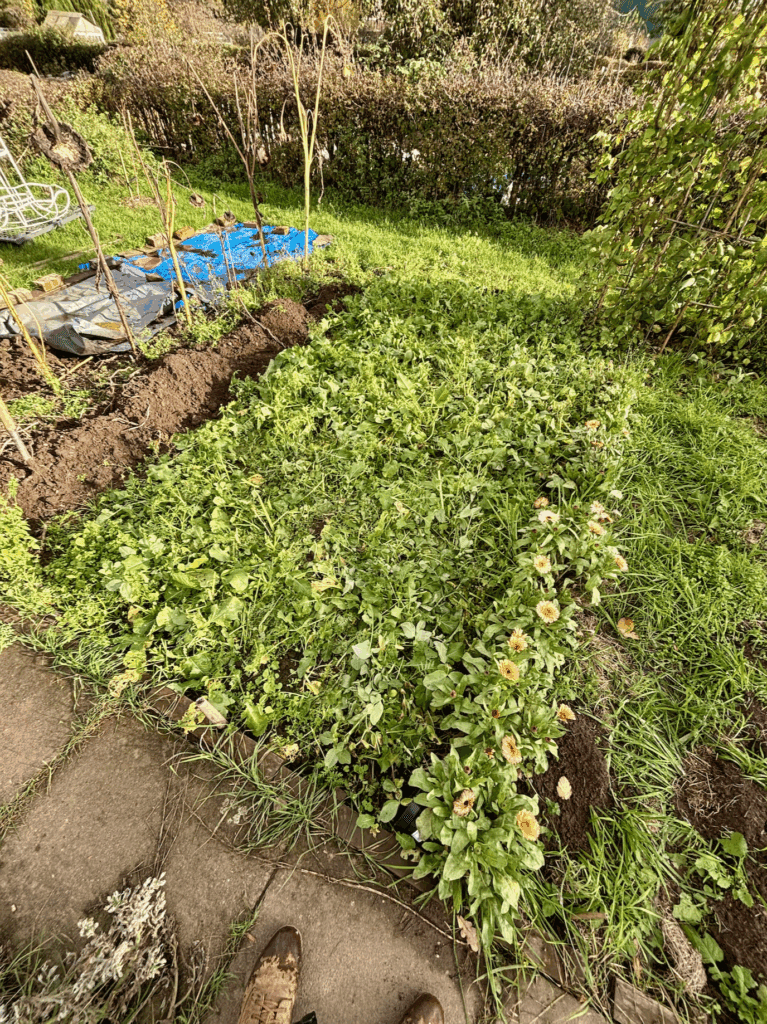
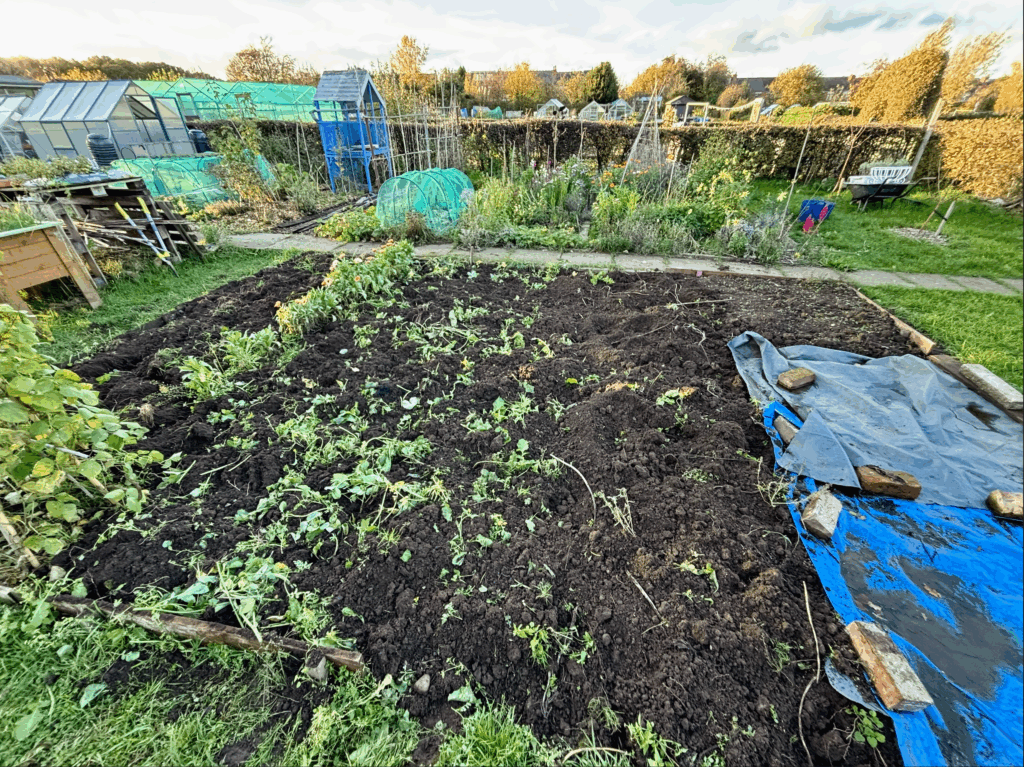
I’ve built a front bed on the new left half to mirror the front bed on the old right half of the plot. This left bed mostly had potatoes, green beans and multiheaded sunflowers grown on it. At the back of the bed I grew three rows of winter leeks that got struck down with allium leaf miner. So by late summer / early autumn the bed was pretty clear.
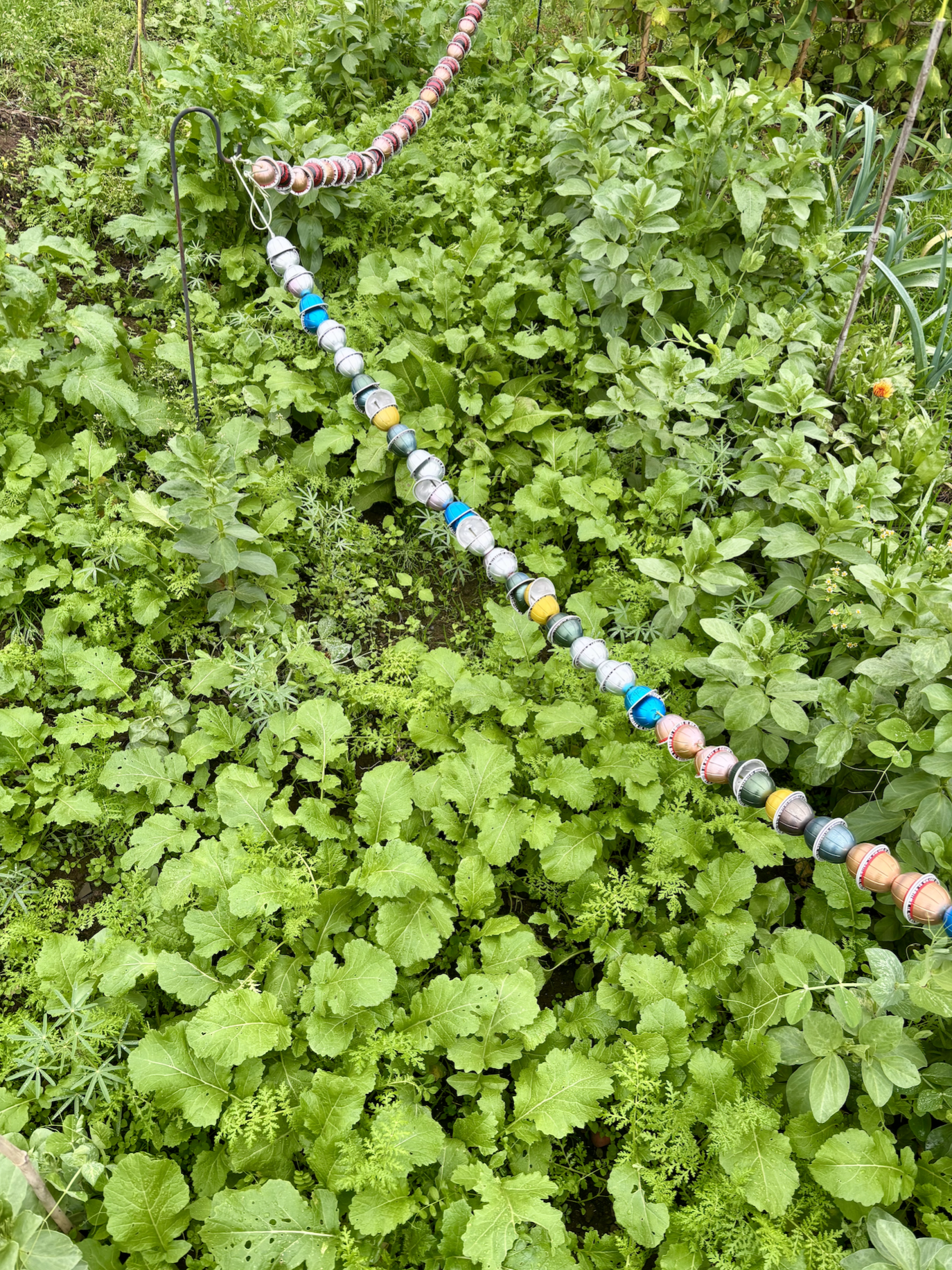
I covered a section of this bed with a mix of caliente mustard, forage peas, field beans, lupins and phacelia seeds. I planted them in two lots so those requiring being sown at a deeper depth went first with the others raked in on top. I didn’t note down a planting time but my guess is mid August.
By mid October the plants were growing nicely (see pic 1 of 3 above), the long season helped. And then in early November I chopped the plants back and roughly dug them in (see pic 2 of 3). For the caliente mustard’s biofumigation properties to work it needs to breakdown underground rather than being left on the surface or smothered (as can be done with other green manures). By digging the ground over again it allowed me to pull out more couch grass risomes, marestail / horsetail and broken glass (a feature of all plots at this site).
I then did another sowing of field beans and forage peas as well as two rows of aquadulce broad beans.
This digging in method before winter meant that I didn’t get much cover for the ground over the cold wet months which is a shame, but I wanted to have a go with the biofumigation. In future years I’ll probably prioritise cover over the biofumigation, but I might be able to do both in years where a patch only has 1st and 2nd early potatoes grown on it if I sacrifice growing any other kinds of crops in the same year – which shouldn’t be a problem with the amount of space I now have.
This bed has changed a lot since the autumn 2025 photos, I’ll come back with current pics soon! The front of the bed is now a perenial cut flower bed, with a row of munstead lavender at the front, dahlias I’ve grown from seed in a row behind, and then behind them tulips. Along the right edge I extended the bed to have a row of perenial herbs: lovage, brozen fennel, purple sage, salad burnet, and rosemary so far. These were transplanted from scattered positions across my original half plot.
More updates soon… watch this space!