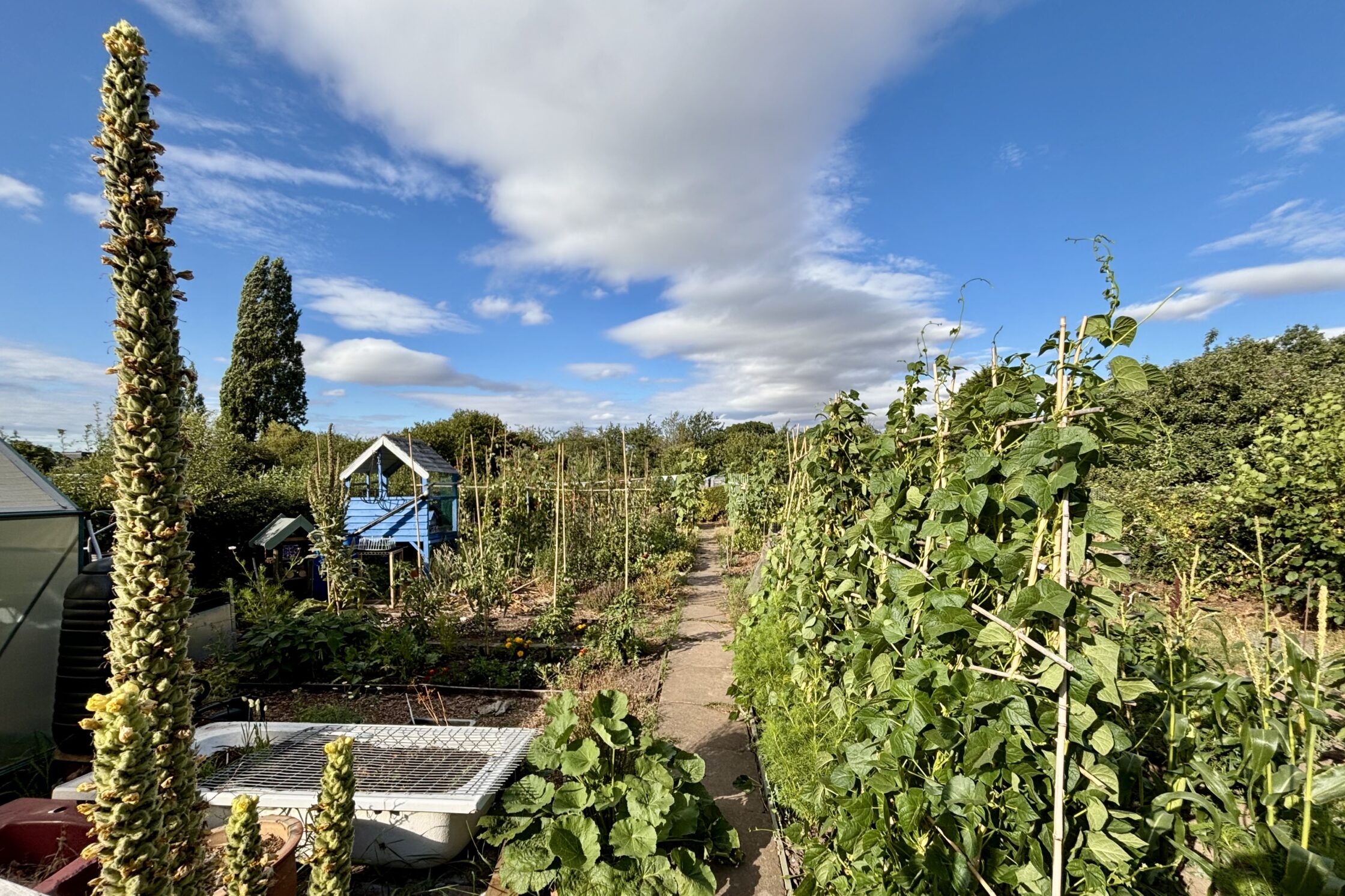
No rain since early to mid June and we’re in the fourth heatwave but where I am at in the West Midlands it’s only hitting the high 20s this time.
It’s worth saying over the past few weeks the Blaenavon and Rhinogydd mountains in Wales and the Cairngorms in Scotland have been ablaze with wildfires. France and Spain have evacuated 300,000 people so far due to wildfires. More than half of England is now in severe drought.
I long ran out of stored rain water so I’m relying on the mains supply we have at the site. I have about 1000L rainwater collection capacity total currently but I want to find a way to collect more over winter for conservation sake.
We’re only allowed to fill watering cans at the tap, no hose pipes or filling large containers. Which is sensible for water conservation. But it takes a lot of walking back and forth in the heat, usually late evening rather than early morning for me.
I’ve topped up the water in my ponds a couple of times. I fill buckets and cover them with netting to stop wildlife getting in. Then leave them for a minimum of 24hr for the chlorine to evaporate before adding to the ponds.
My lily won’t flower in its first year but it’s looking very healthy. I’ve watered the planting around the pond a couple of times to keep them alive. Most other perennial planting at the plot is drought tolerant and needs less care. Each time before a heatwave hits I put a can of water on each of my young pear trees.
Harvested crops
Sporadic strawberries, raspberries and blackberries. Parsley, Korean mint, basil, rosemary, thyme, marjoram and oregano mostly herb wise. The last of the lettuce. Beetroot, courgettes, cherry tomatoes, spring / green onions, green chillies and two red (Cayenne and Apache), purple French beans, ‘Marvel of Venice’ or Miracle of Venice yellow French bean, five runner beans. 1st early potatoes and a few 2nd early potatoes. Garlic (or maybe end of last month?) and shallots. Possibly my first cucumber before the month is out.
Calendula, cosmos, cornflowers, dill flowers, sunflowers, dahlias, gypsophila, achellia ptarmica, achillea millefolium, gladioli, statice, bread poppy seed heads, lavender.
Seed sowing
I attempted seed sowing earlier in the month. July is usually the worst month for succession sowing things like radishes, beetroot, lettuce, but as my breakfast radishes and pak choi haven’t got past being 2cm high in previous attempts I had another go anyway. These are in my bath tub where my shallots were harvested. I’ve also planted a row of perpetual spinach and a row of Swiss chard. All are growing well so far except the pak choi which has been eaten again.
The coriander varieties I planted last month are doing well, I resowed a couple of bare patches.
I’ve also planted ‘Uzbek Golden‘ and ‘Black Nebula‘ carrots where my lettuce was in my tallest raised planter. I usually plant pointed varieties in spring as they have time to fill out their shape and then a round carrot variety like ‘Sweet Candle’ in August as they do better for late cropping, but will see how these pointed varieties do. A new neighbour gave me one of each of these varieties that he had grown and both varieties taste fantastic so I will be excited to have more.
Also planted flowering biennials honesty, dyer’s woad and sweet william. One honesty has germinated so far, the woad was only planted a few days back so still waiting for germination, and the sweet william germinated very well so I now have 100+ plants… My plan currently is to plant a 2x4m bed of sweet william in autumn and give the remaining plants away.
My previous spring cabbage and winter cauliflower seed sowing attempts got eaten by something so I resowed them recently and they germinated well.
Would usually have sown green manure by now on empty beds (especially the potato bed) but with no rain it seems pointless as they won’t germinate.
Beans
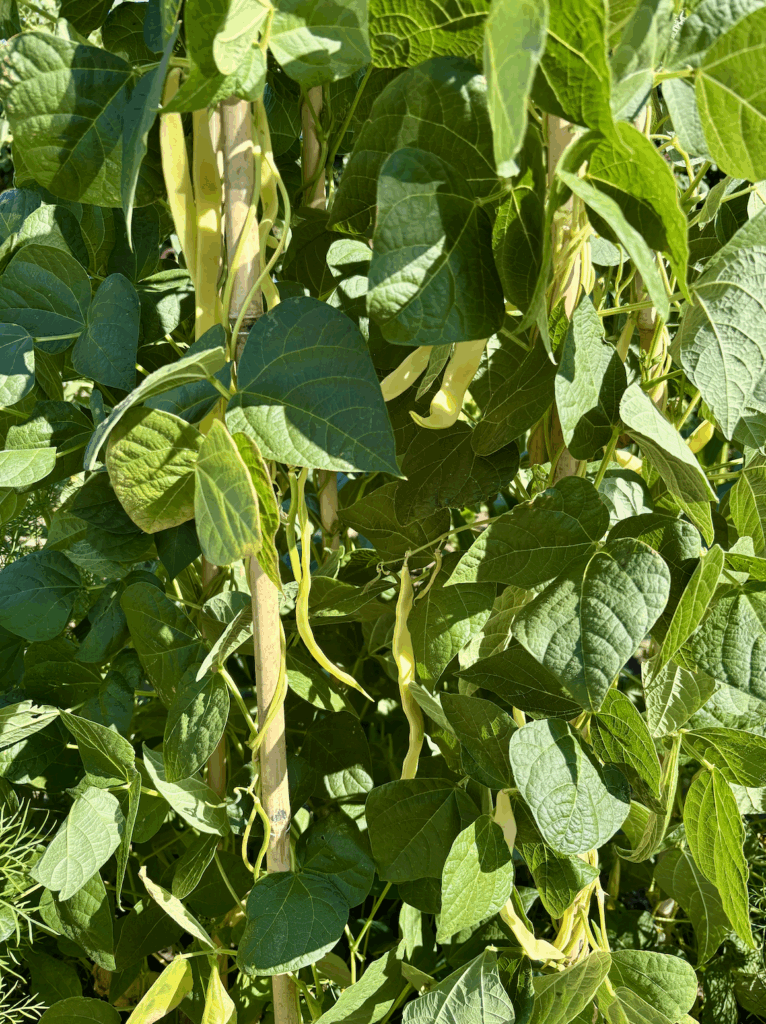
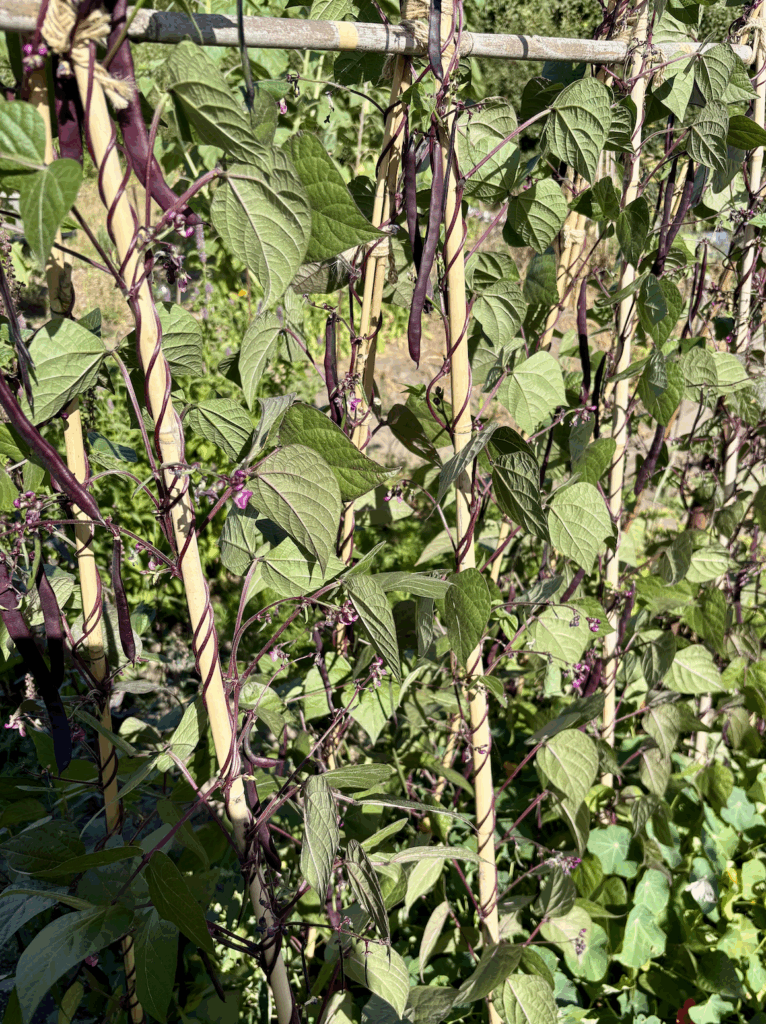
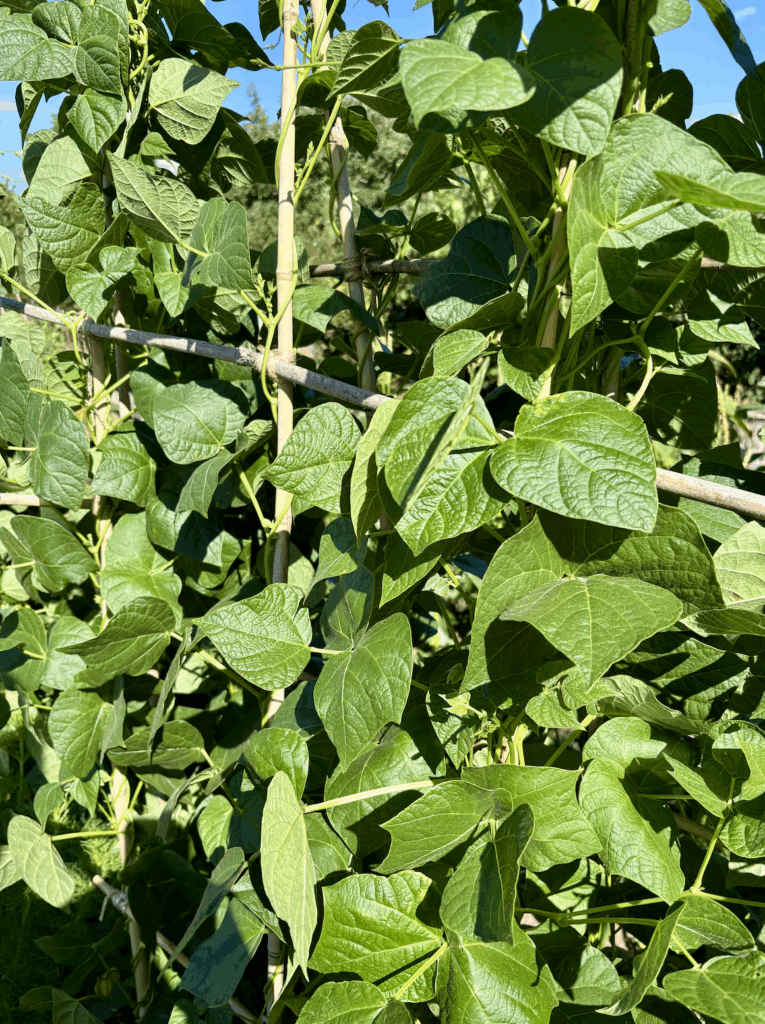
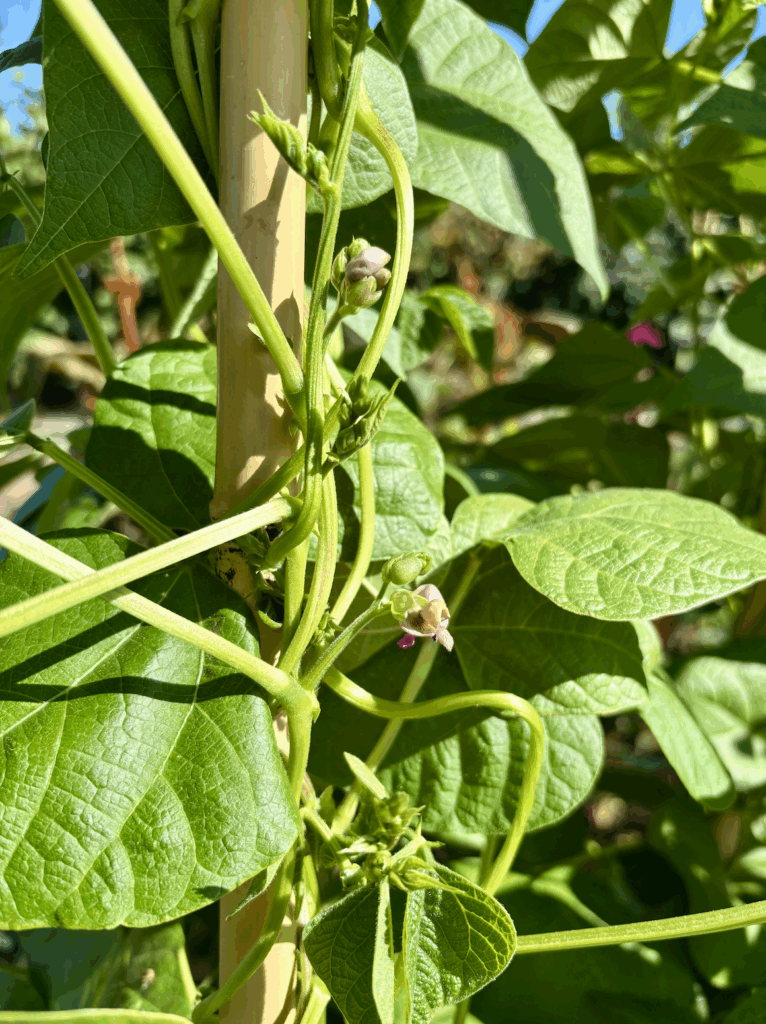
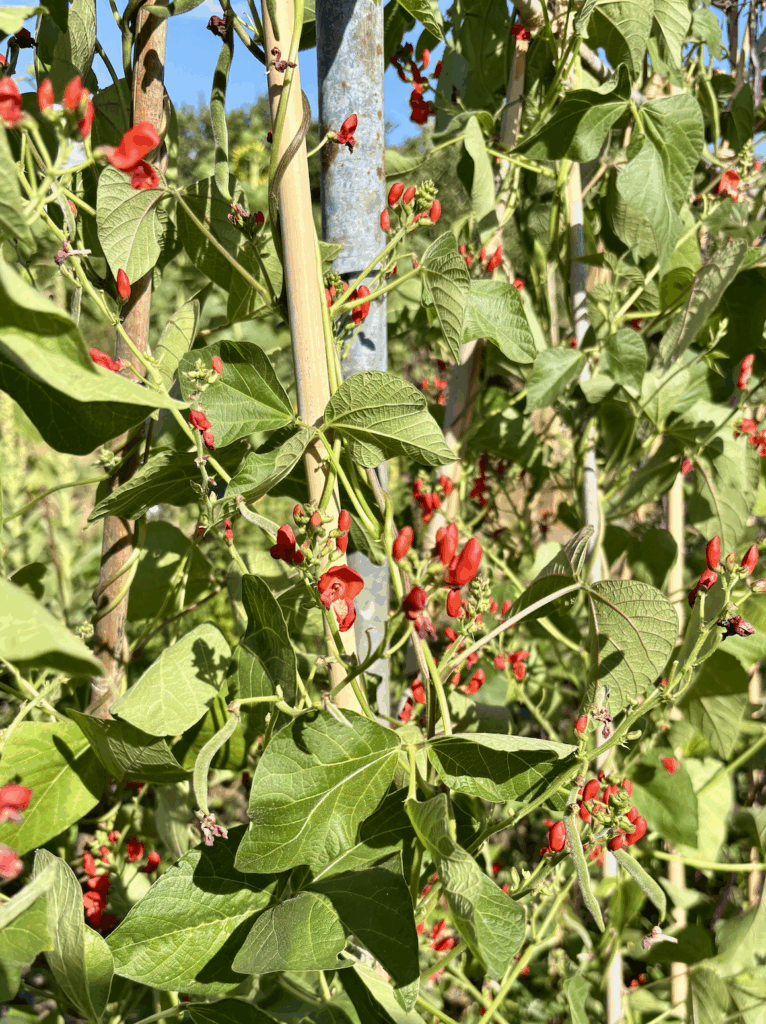
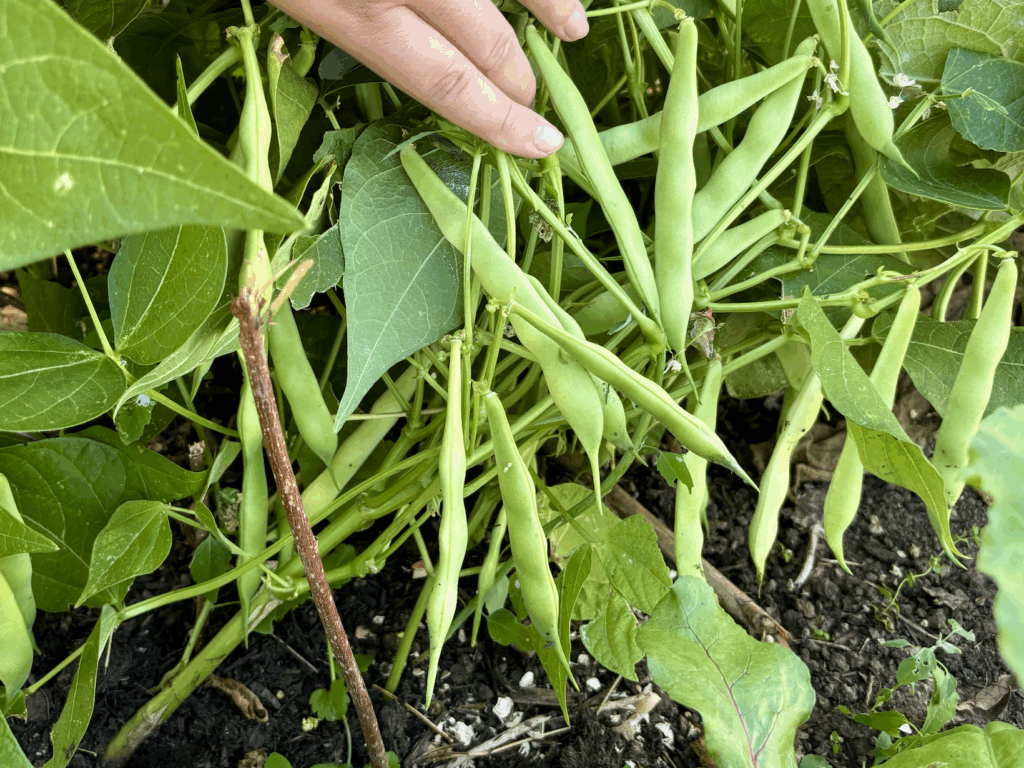
Both of the French bean varieties and the cannellini (from seed swap) have been setting and growing well. The runners have been flowering for a long time but are struggling to set in the heat. I could spray them early morning with water to help but it’s an extra job and time spent – instead I’m waiting for them to set when the weather cools off as runners have a long season.
The Cherokee Trail of Tears variety has some small flowers appearing in the last couple of days. Still nothing on the Greasy beans but I can see flower stems forming. I’ll save seed from the earliest producing plants and eat whatever else they produce. It’s my first time growing them and I don’t know anyone else that has, but my guess is that because they’re varieties acclimatised to the USA they usually have the benefit of a longer season and flower later than European climatised varieties.
Greenhouses
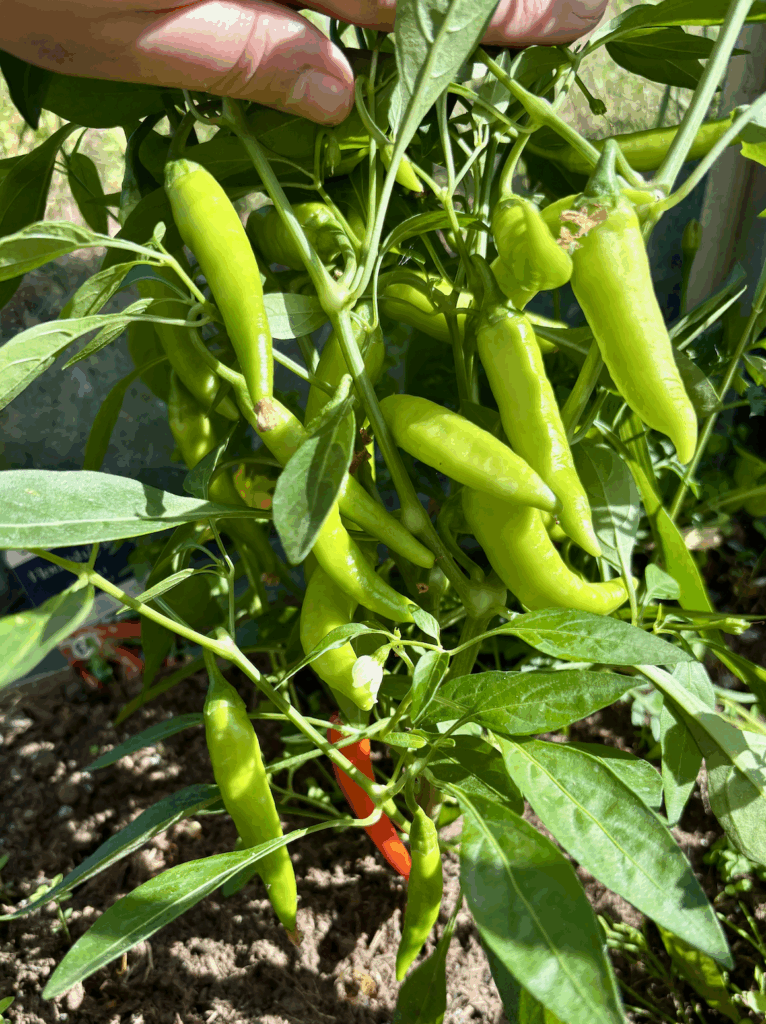
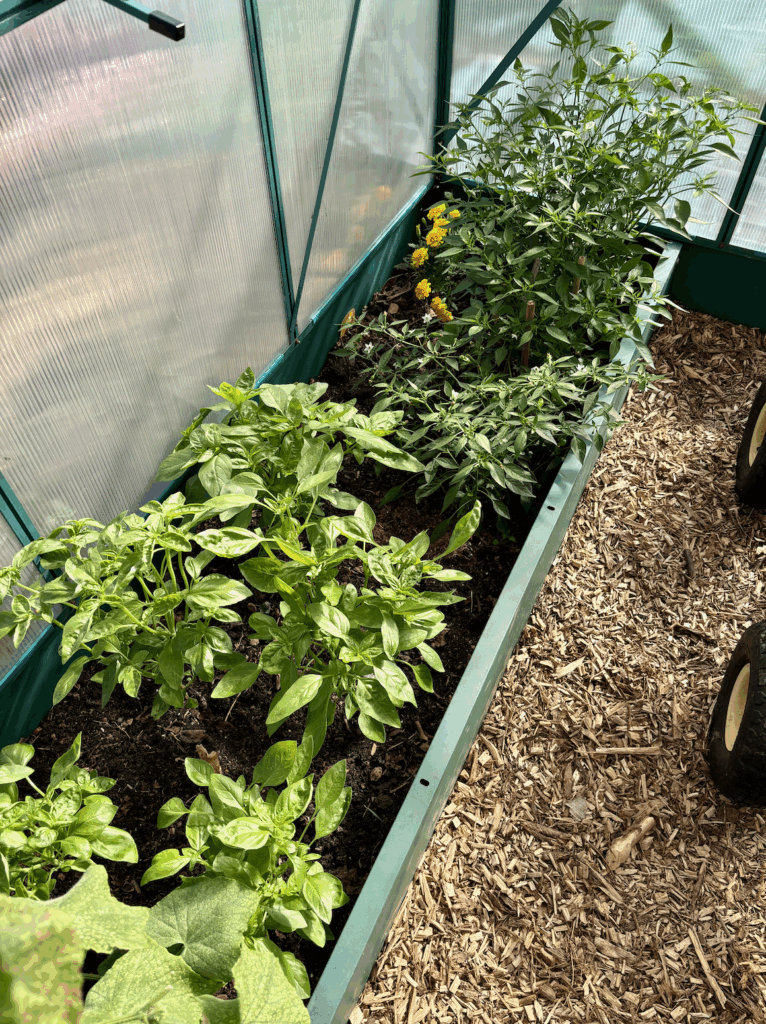
I have two ‘Green Zebra’ tomato plants, one ‘Sivri Biber’ and one ‘Cayenne’ chilli plants, and basil growing in my glass greenhouse.
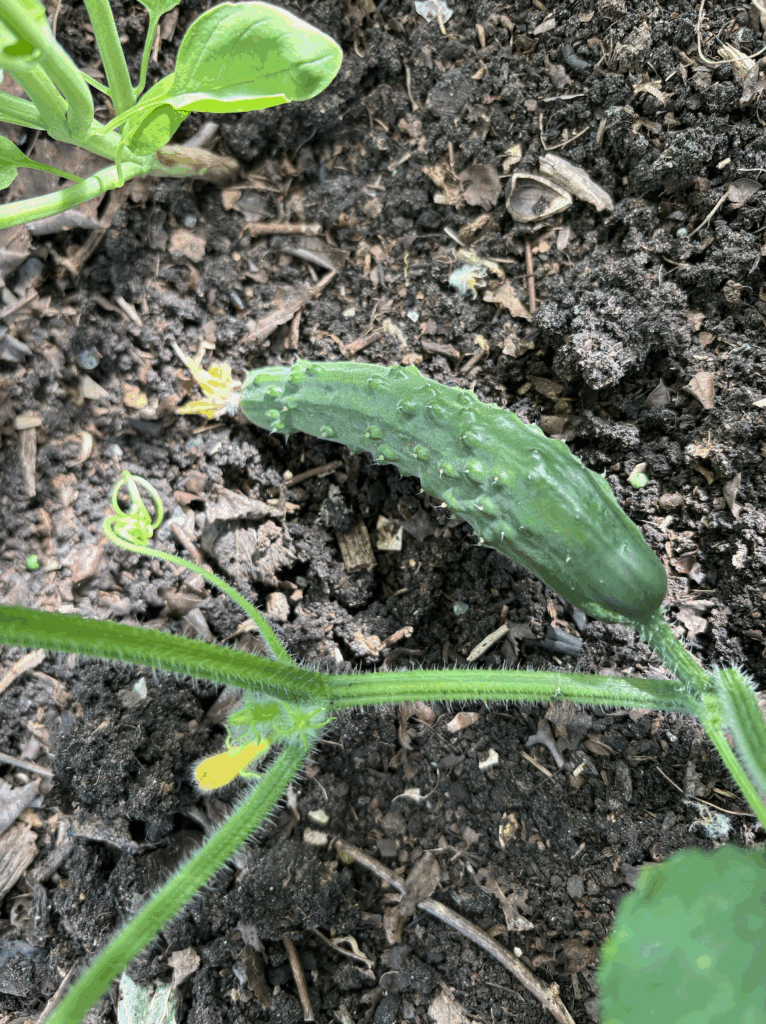
And in my polycarbonate greenhouse I have one gherkin, one ‘Marketmore’ cucumber, three ‘Apache’ chilli, two ‘Cherven Gradinski’ “Rosu de Gradina” (Garden Red) tomato plants and two ‘Babino Chudo’ (Grandma’s Miracle) tomato plants. Both greenhouses have French marigolds to attract pollinators.
The Apache and Cayenne plants were bought from a supermarket after I ended up with only one plant from the pepper seeds I sowed in early spring. All have flowers and fruits. I’m just waiting on my seed grown Sivri Biber to start flowering.
The cucumber and gherkin have been flowering for a long while but heat stress has made young fruits fall off or flowers remain unpollinated. Much the same for the greenhouse tomatoes with no pollination. So in the last two weeks I’ve been hand pollinating with a soft small art brush.
The only year I grew cucumbers outside it rained, stormed and was constantly grey out so they produced little. But this year I would have been better off keeping the cucumbers outside. Swings and roundabouts.
I’ve been over the moon with my basil, I’m cropping a big tub full every two days. It’s been a joy to indulge in fresh pesto and salads, and I’m freezing batches of pesto for later in the year too.
Tomatoes
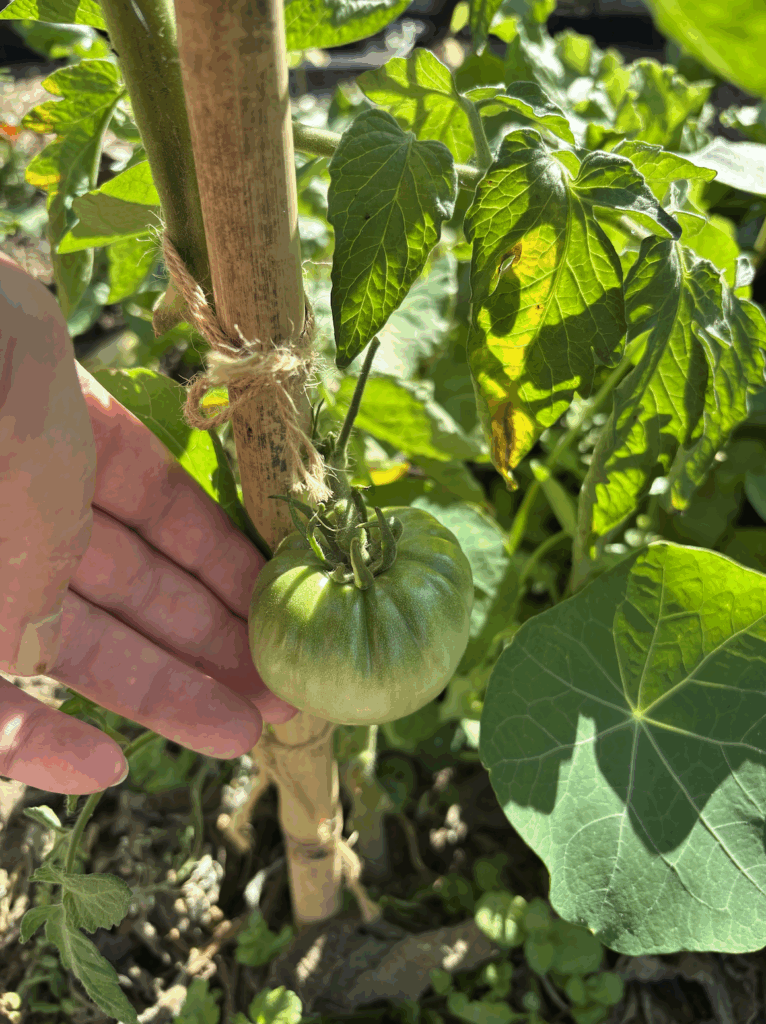
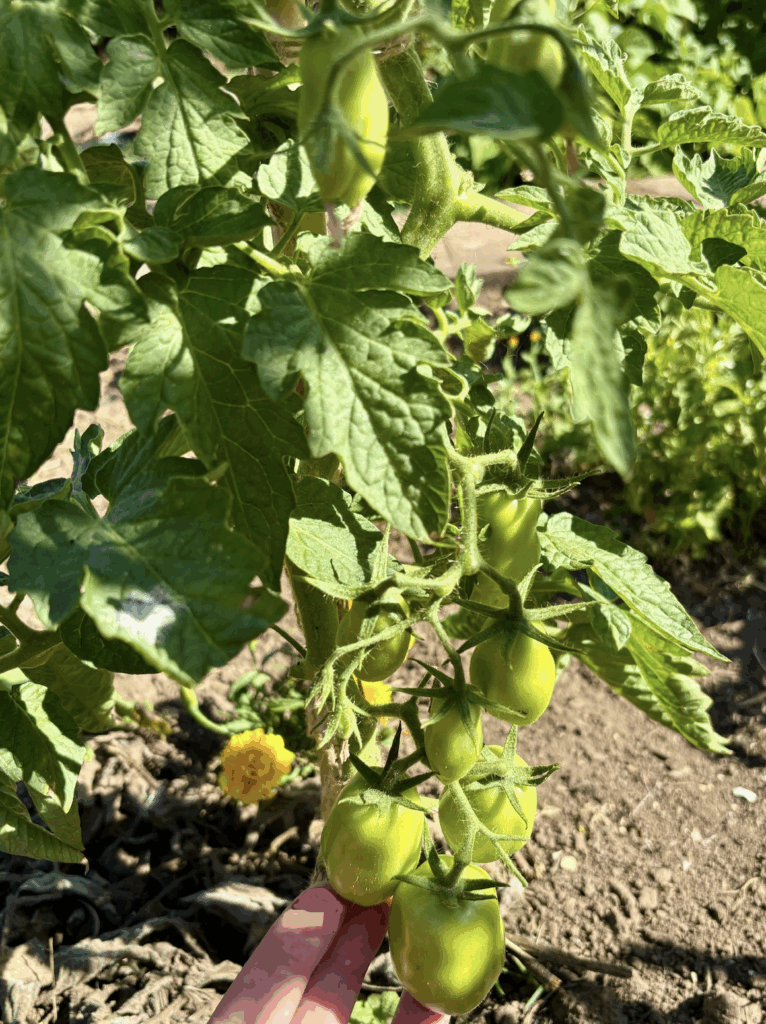
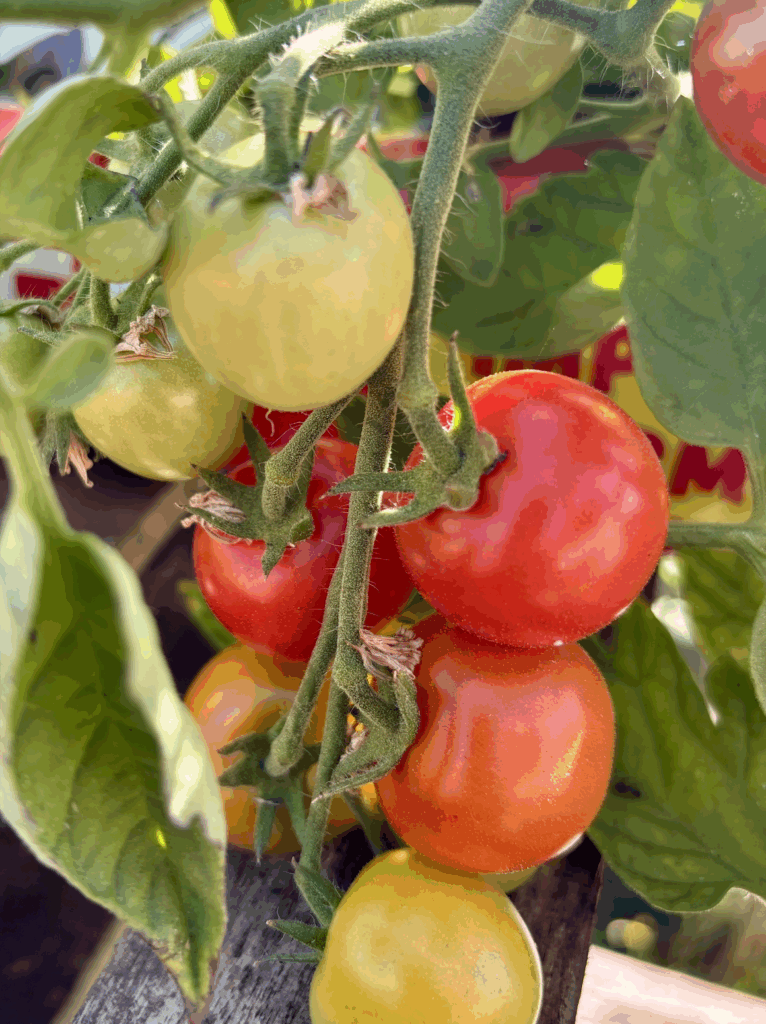
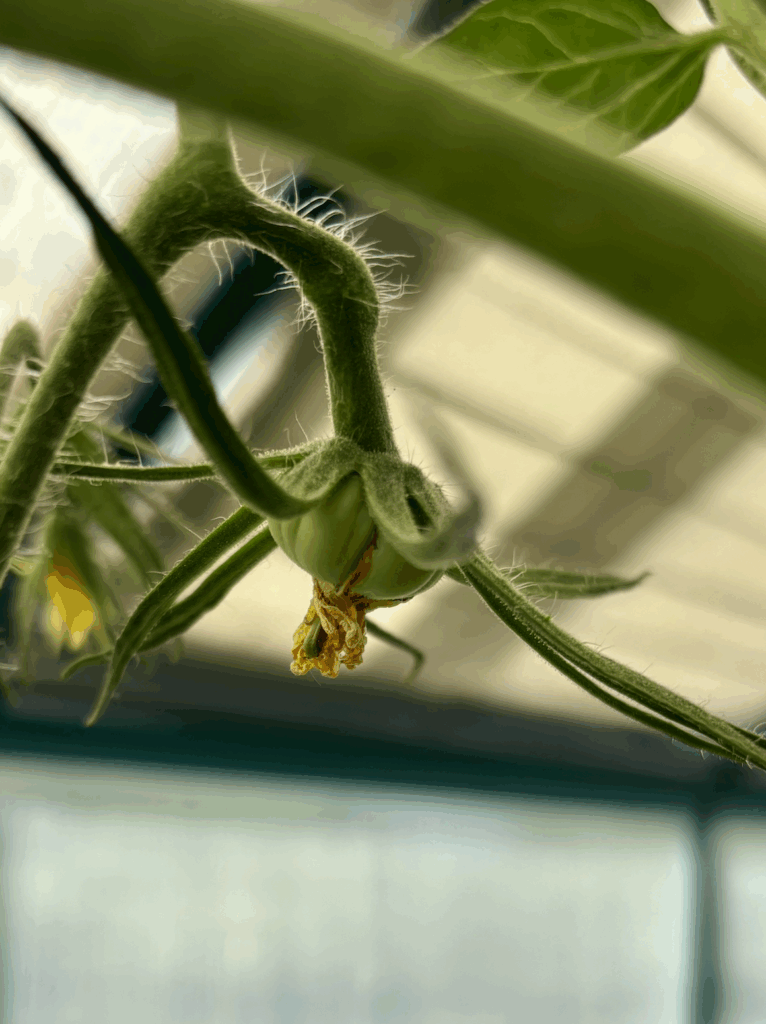
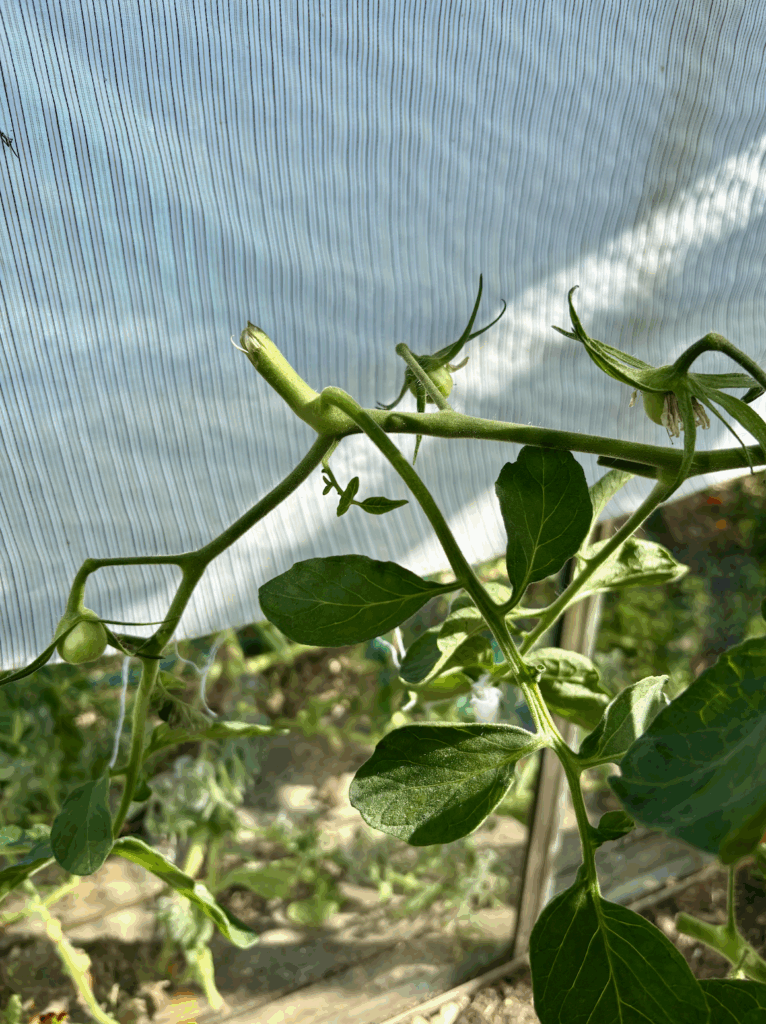
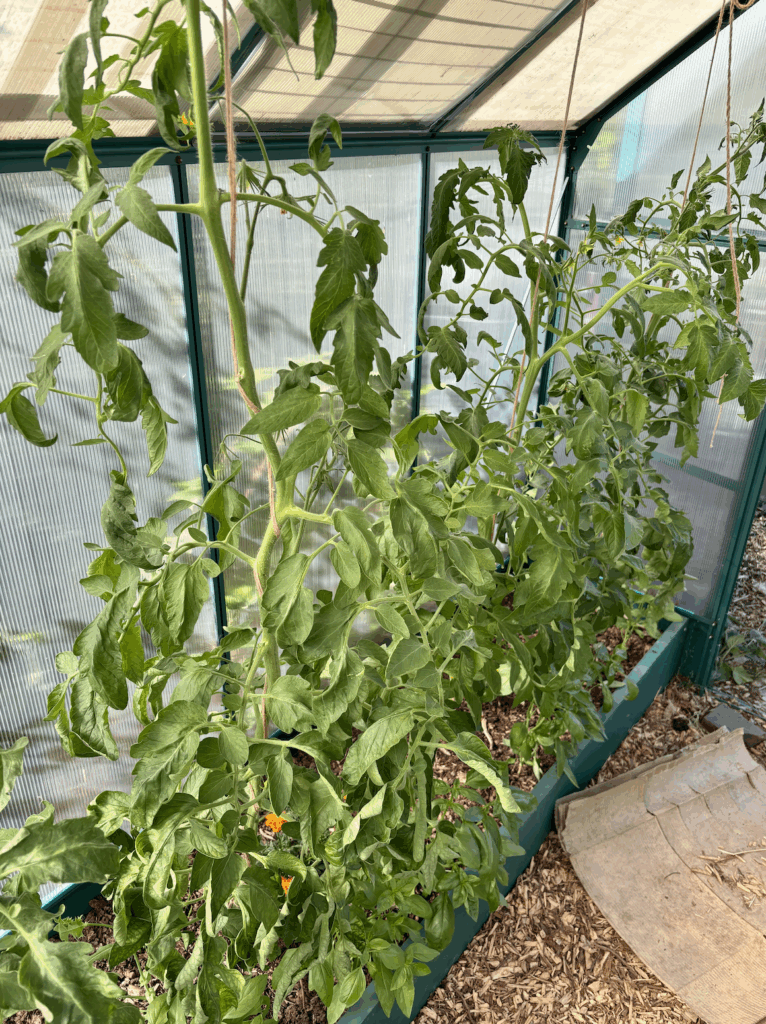
I have four ‘Maskotka’ trailing tomato plants in two grow bags outside which have a prolific amount of tomatoes on. I’ve picked 40ish so far over the past fortnight with many green ones and newly set fruit remaining. The variety has been fab this year and last, I bought seeds for 50p a pack without knowing how they’d taste. Sweet with a little acidity. An open pollinated variety too.
I have one each of the large fruit varieties ‘Cherven Grandski’ and ‘Babino Chudo’ growing outside. They’ve only started flowering recently but one plant has a decent sized tomato already growing. And I have three ‘Roma’ plum variety plants, they usually do fine outside and they’ve pollinated better than the other indeterminate / vine varieties. All of these outdoor indeterminate plants are much shorter and look stunted compared to those in the greenhouses, but fruiting better.
Flowers
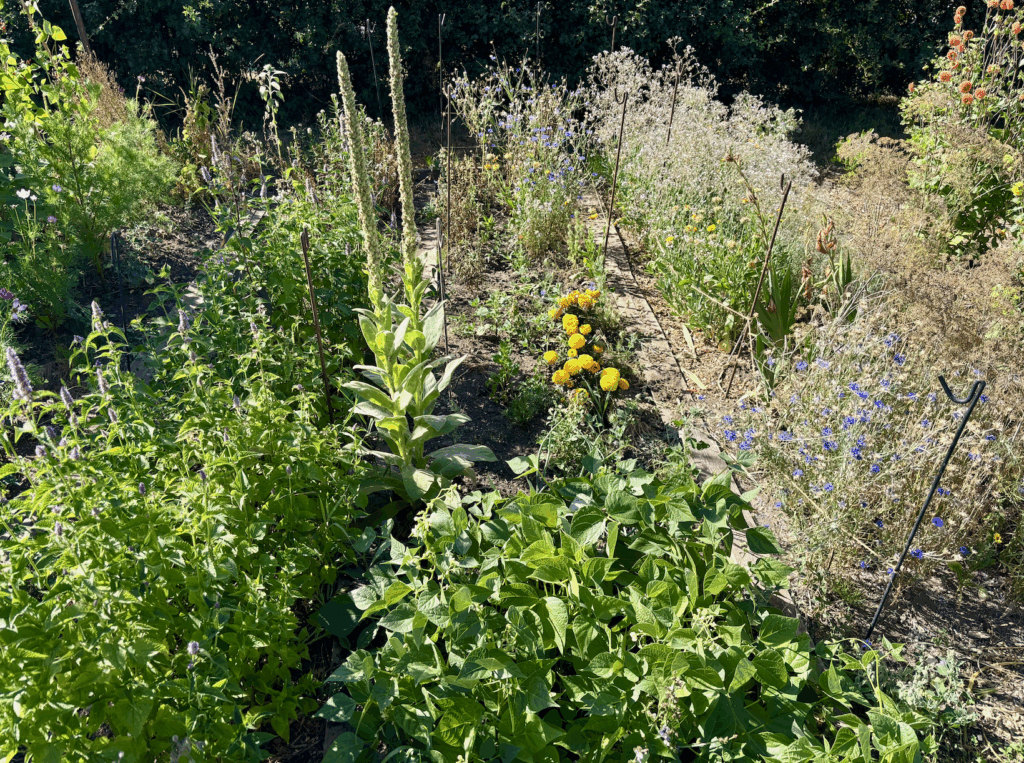
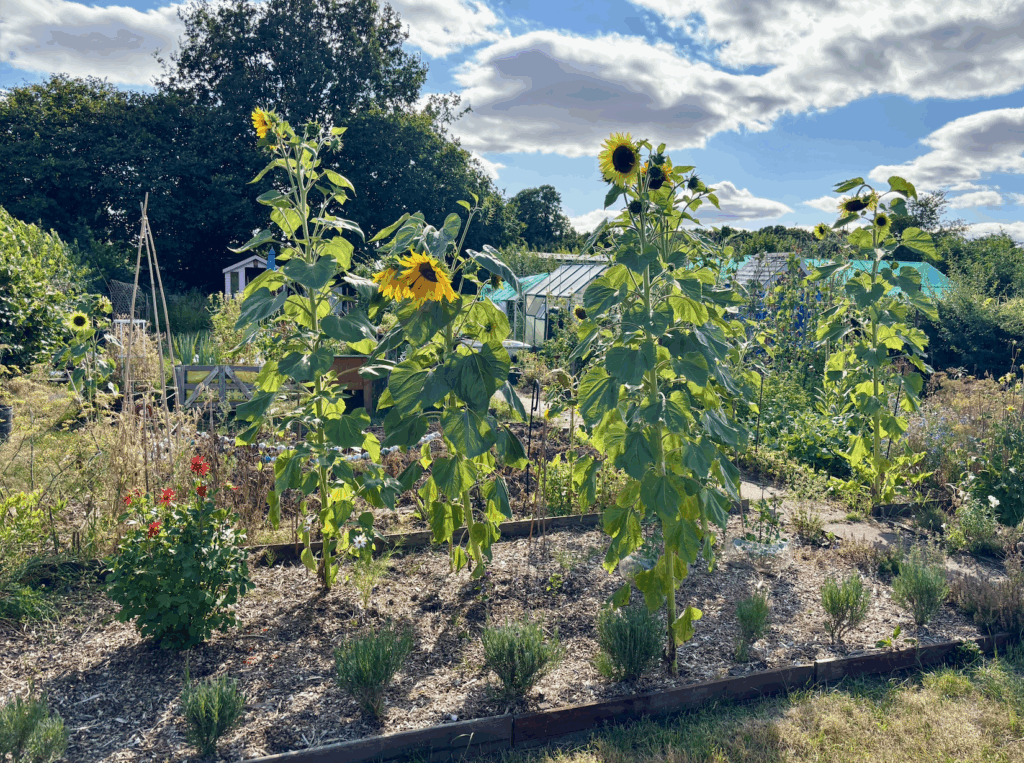
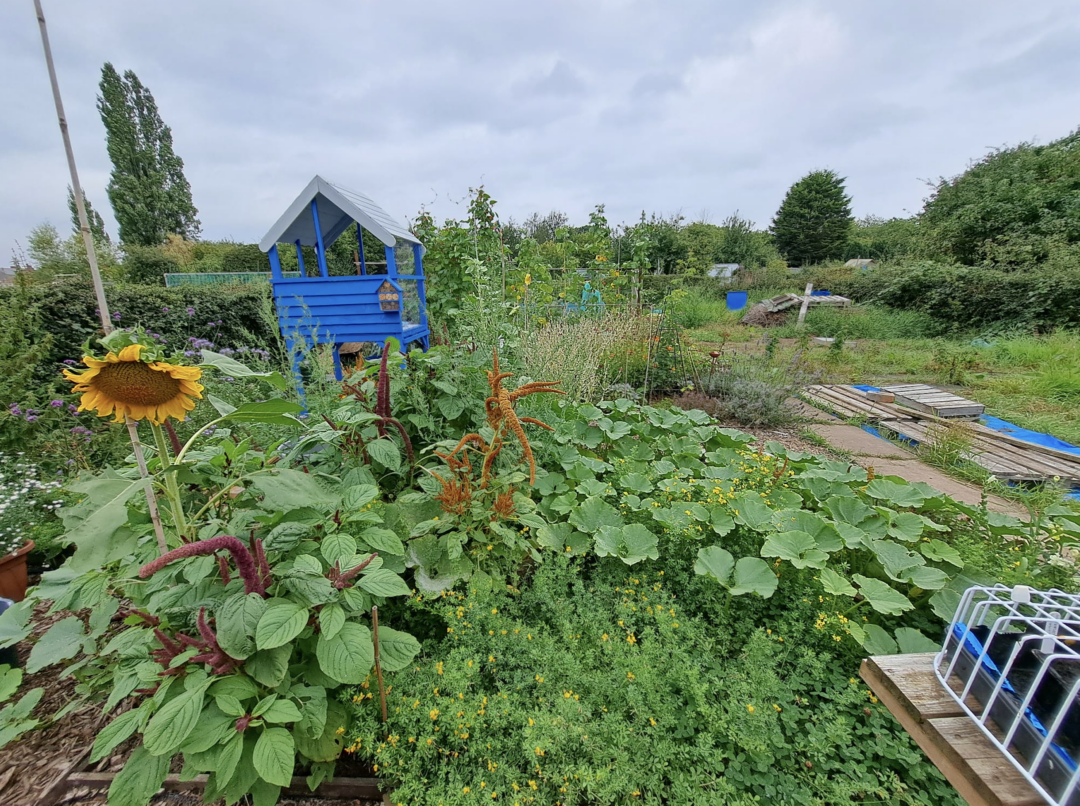
The first photo above is of my main cut flower bed. It’s very crispy looking, partly as I haven’t kept up with deadheading. The Korean mint (Agastache rugosa) can be seen in a block at the front left, it’s barely had any water and it’s been very resilient through difficult conditions. In the middle foreground I have a second patch of the seed swapped dwarf cannelini beans, although there seems to be some climbing in the mix with this batch.
It’s hard to see from the image but there are young zinnias about to flower and young Chinese asters. I cut back the gypsophila at the back right after this image was taken. Lots of the crispy bits are cornflowers and dill flowers in seed.
The second image is of my front left bed as you come through the plot gate. Originally I had a line of young dahlia plants but only three plants remain. However the self seeded sunflowers have filled the gaps and have kept themselves happy through drought. At the front of the bed you can see the row of young ‘Munstead’ lavender I planted last year. I cut back the buds earlier in the year to help them put energy into bushing out. There’s lots of young thymes growing on the right edge and sedums, salad burnet and a newly dead purple sage (RIP) on the left edge out of view.
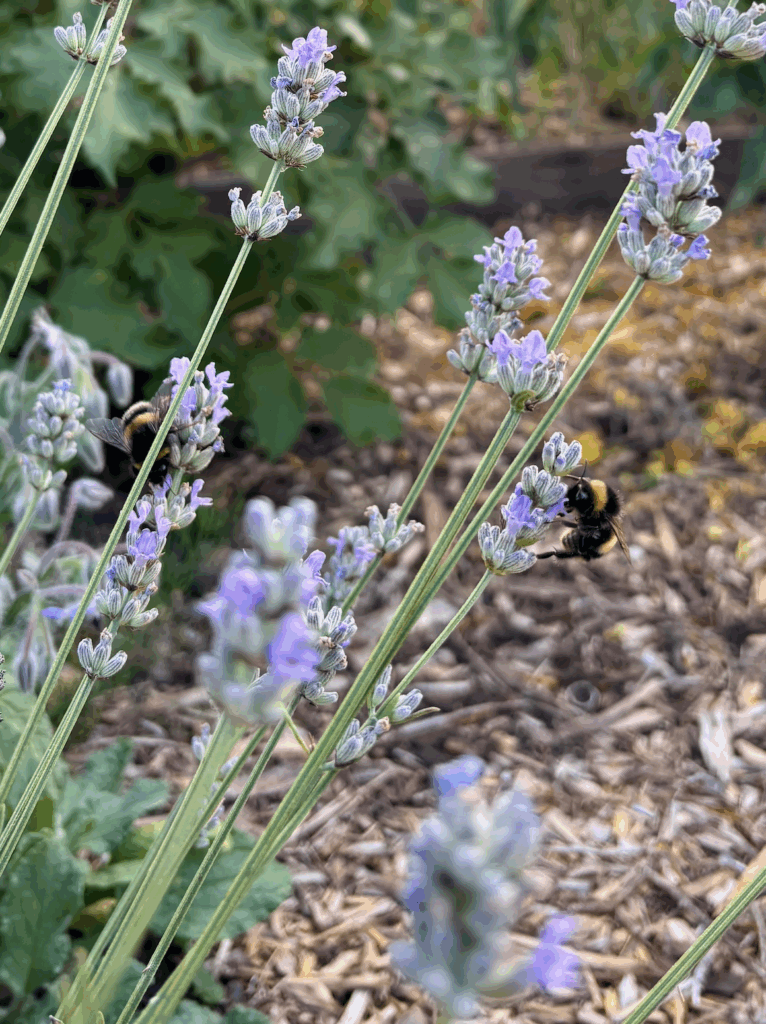
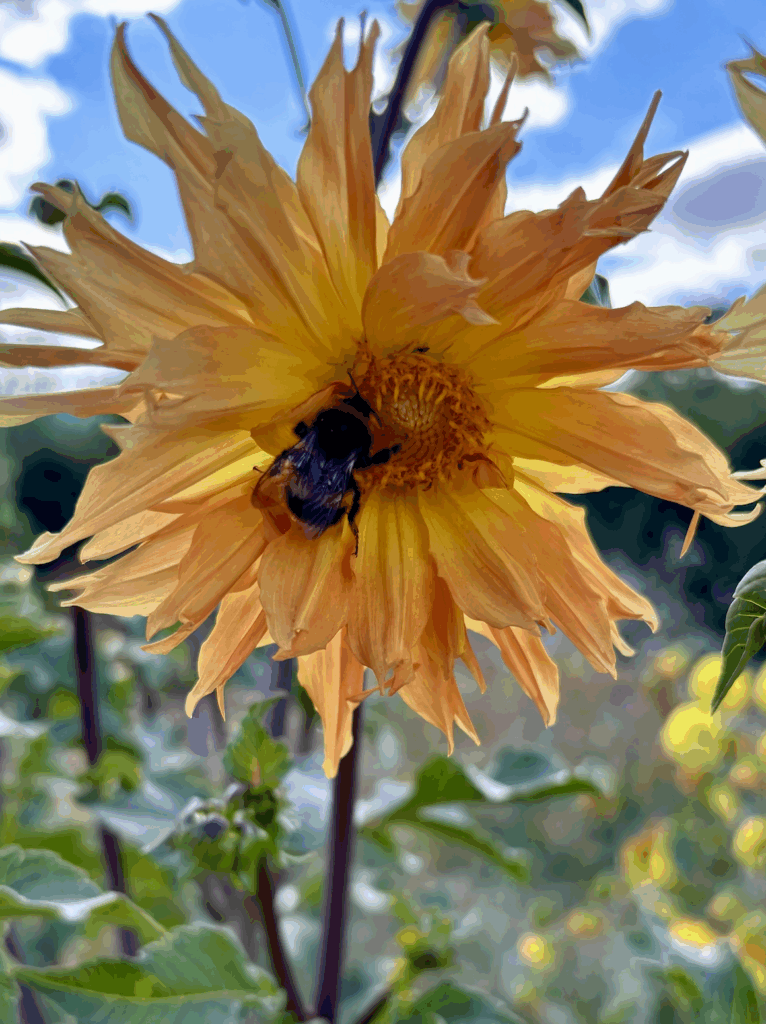
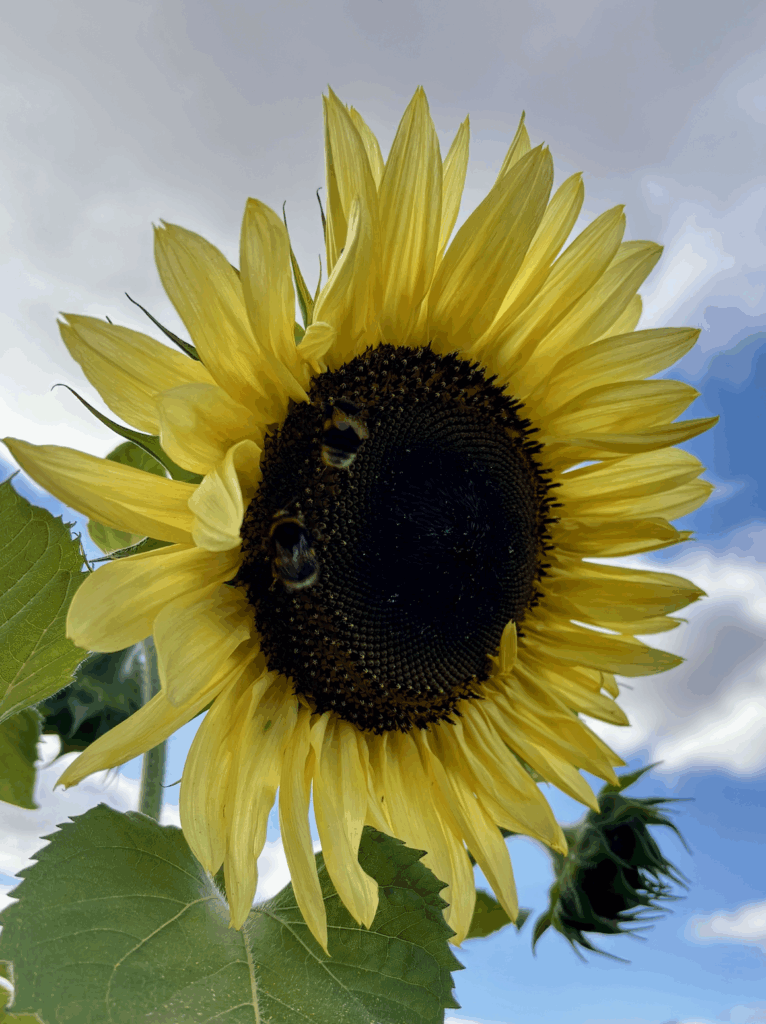
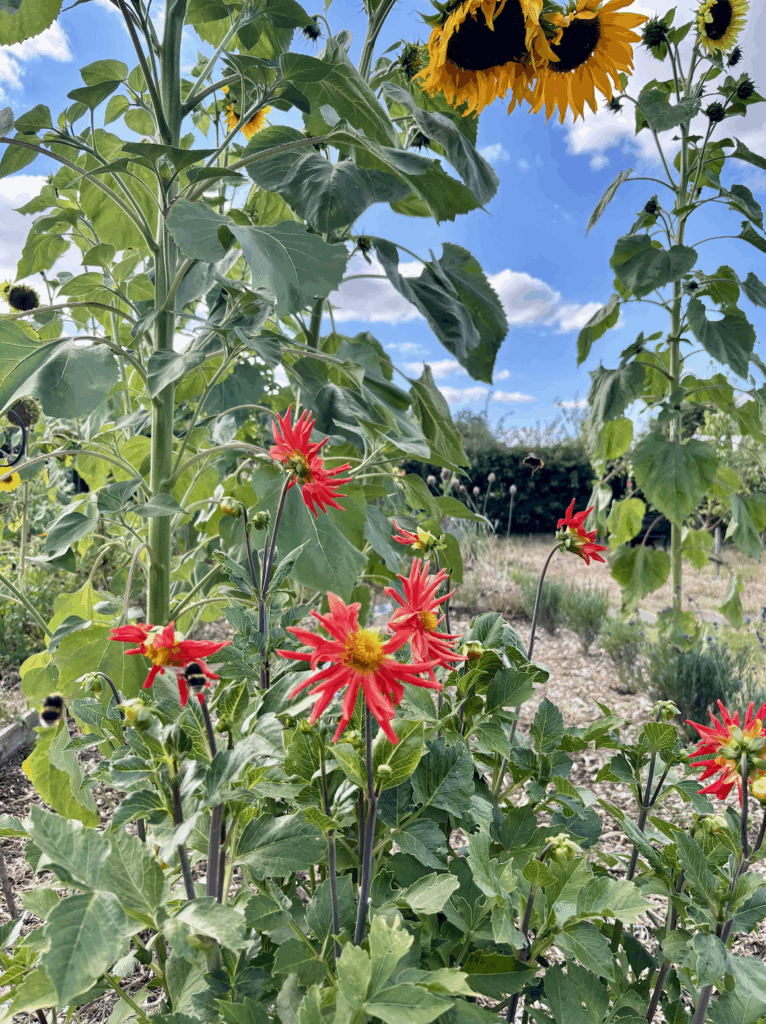
Both sides of the central path at the front have this dahlia and lavender combo. It’s alive with bumble bees. I’ve recently been giving water to the lavender and dahlias once a week to make sure they continue to produce nectar to keep the bumblebees alive through the drought.
Other bits and bobs
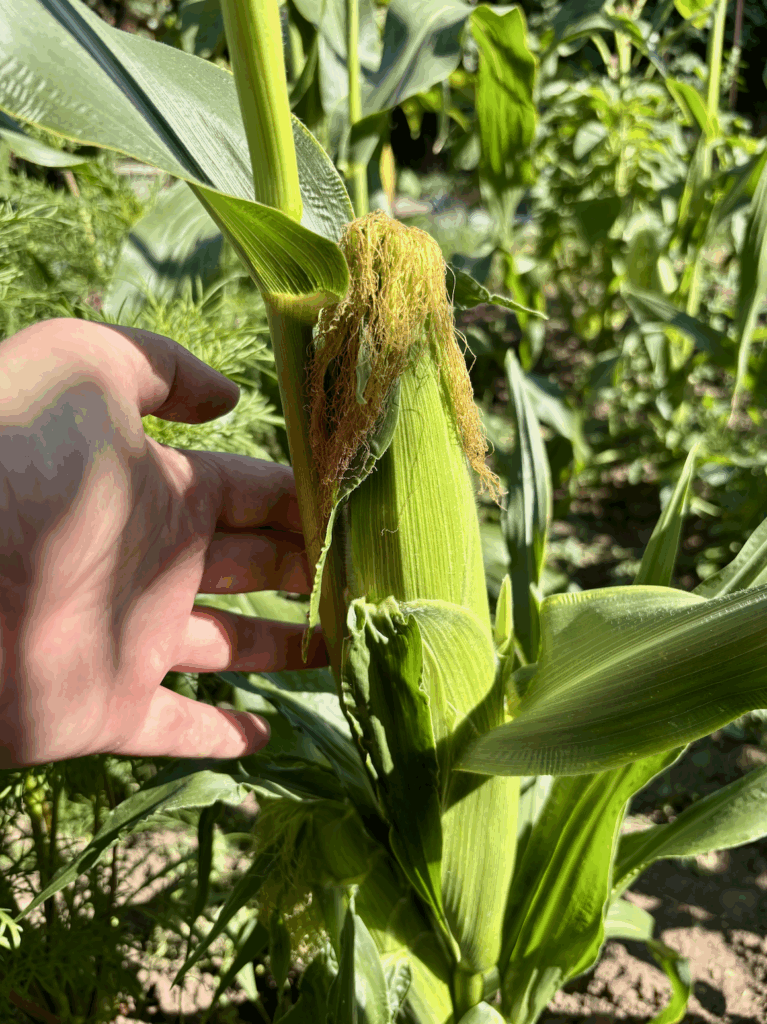
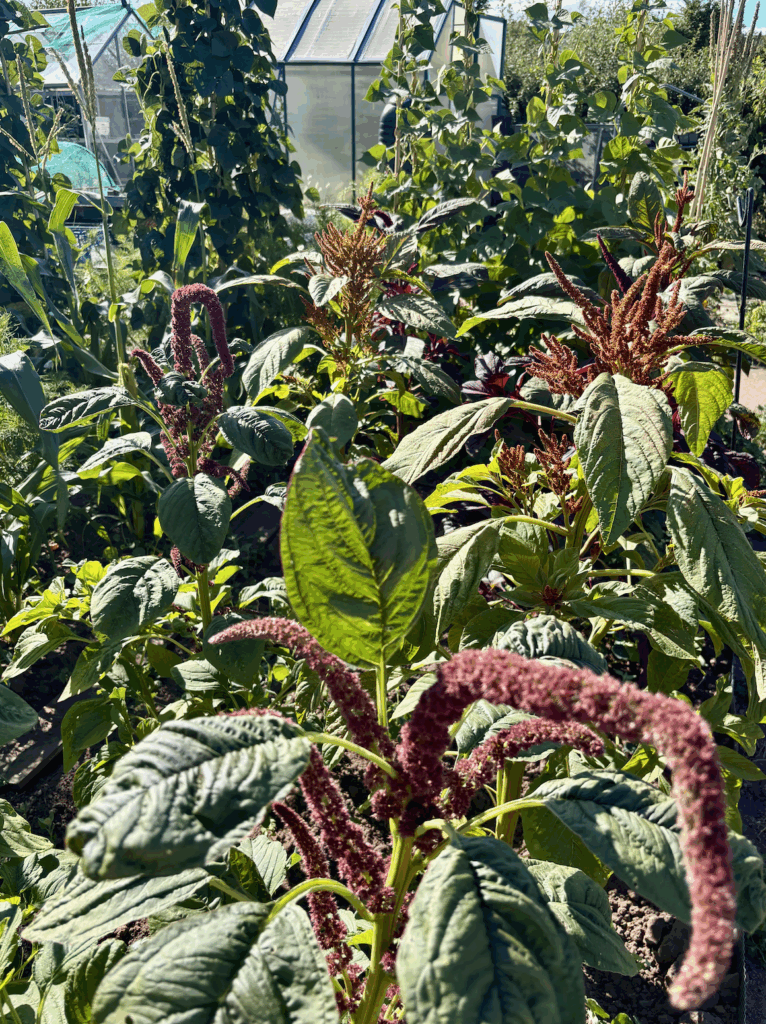
It’s my first time growing sweetcorn and it’s hard to know how much to water or feed them. Usual UK growing advice isn’t helpful when we have Mediterranean weather this year. But they seem to be healthy and productive plants so far.
Amaranth is always easy to grow, with seeds from Real Seeds. I often grow it between winter squash plants as it quickly grows above the sprawling squash leaves. This year I’m growing it next to my sweetcorn. I planted nasturtiums to cover the ground below (I do the same with my climbing beans) but as we’ve had no rain and I haven’t really watered them (they’re drought tolerant) the nasturtiums aren’t doing much. I feel bad to have bare ground for soil health sake but it’s just one of those things.
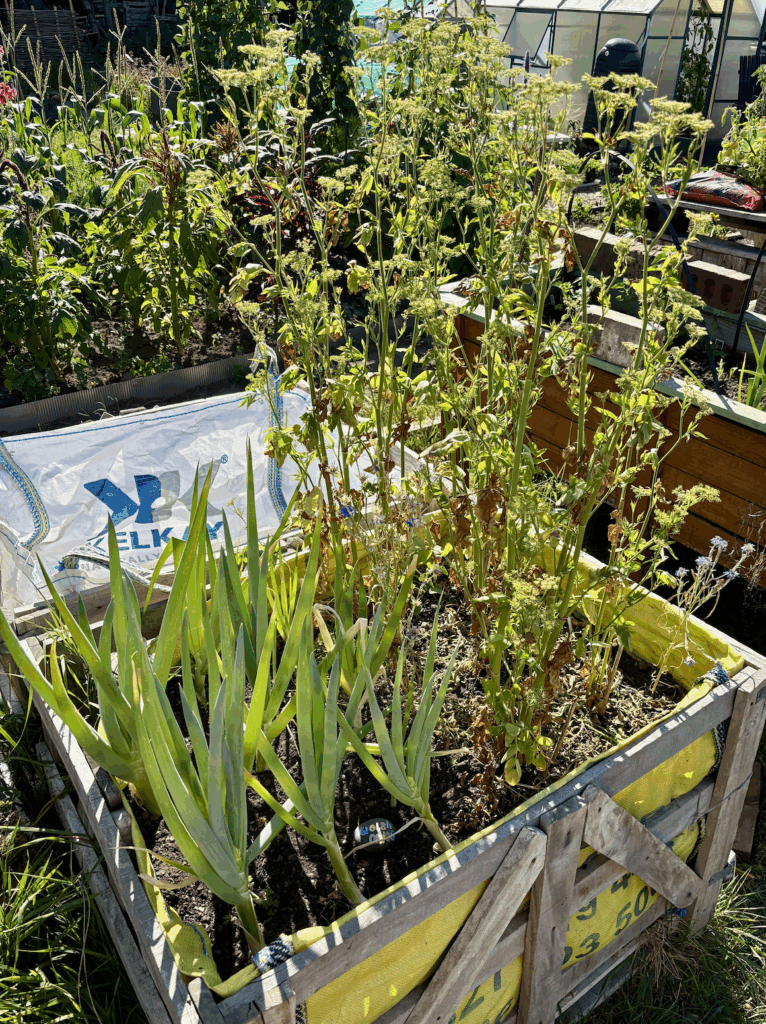
The Welsh onions (Allium fistulosum) and skirret (Sium sisarum) are doing well in their nursery bed as far as I can tell. I’m still not sure where I’ll plant them long term but wanted to give them the best chance in a raised bed for now to get them established.
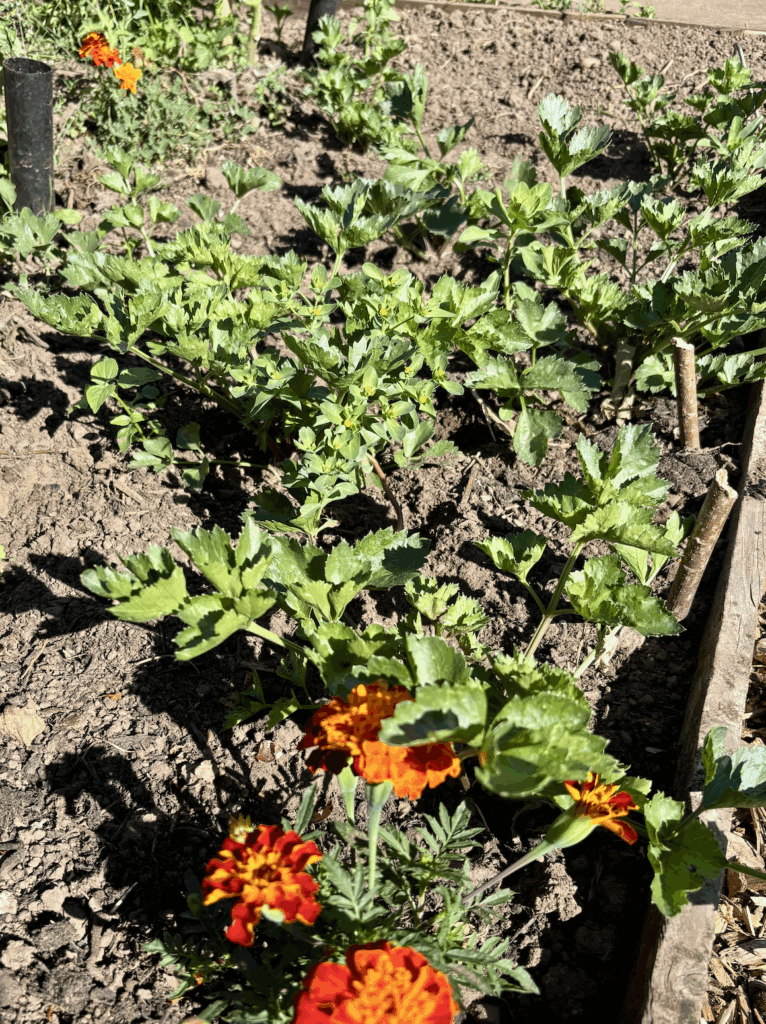
A neighbour from Hungary gave me celeriac seedlings in spring which have been doing well. I don’t think I’ve prepared celeriac to eat myself before so it’ll be interesting to try. My neighbour labelled them “Hungarian celeriac”, I don’t know what the variety is or if it will be different to regular celeriac but it’ll be fun to try regardless.
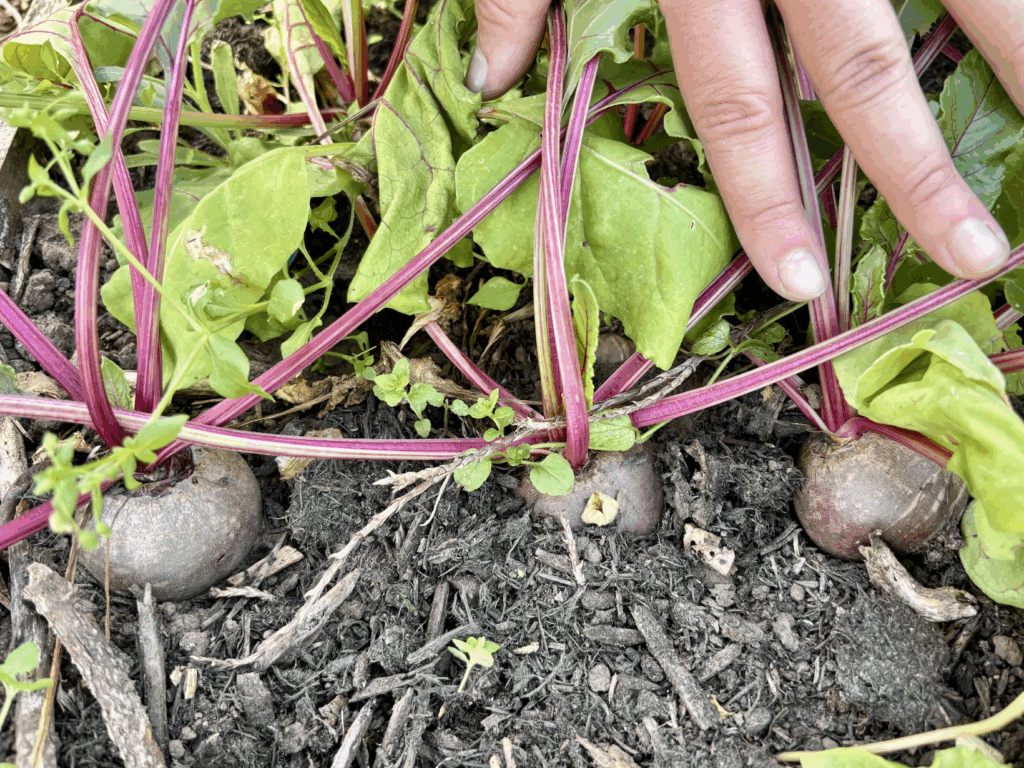
I have beetroot growing in a few patches but they vary in size so far. I’ve already been harvesting from the patch shown above, the rest should catch up.
I’m already thinking of how to change my planting scheme for next year and reflecting in lessons learned so far. With my shady comfrey and nettle patches I have options to mulch through “chop and drop” but I still need to reflect on how to mulch better when there isn’t rain to grow as many cover crops between plants.