I’m not generally a Monty Don watcher. I like him well enough as a presenter but I prefer gardening content that focuses on smaller gardens, rewilding or vegetable growing. However someone recommended to me an episode of his latest BBC TV series ‘Monty Don’s British Gardens’, S1 E3, where he visits the largest allotment site in the UK and interviews some of the tenants. I wanted to bung what I saw in a post for future reference so here we go.
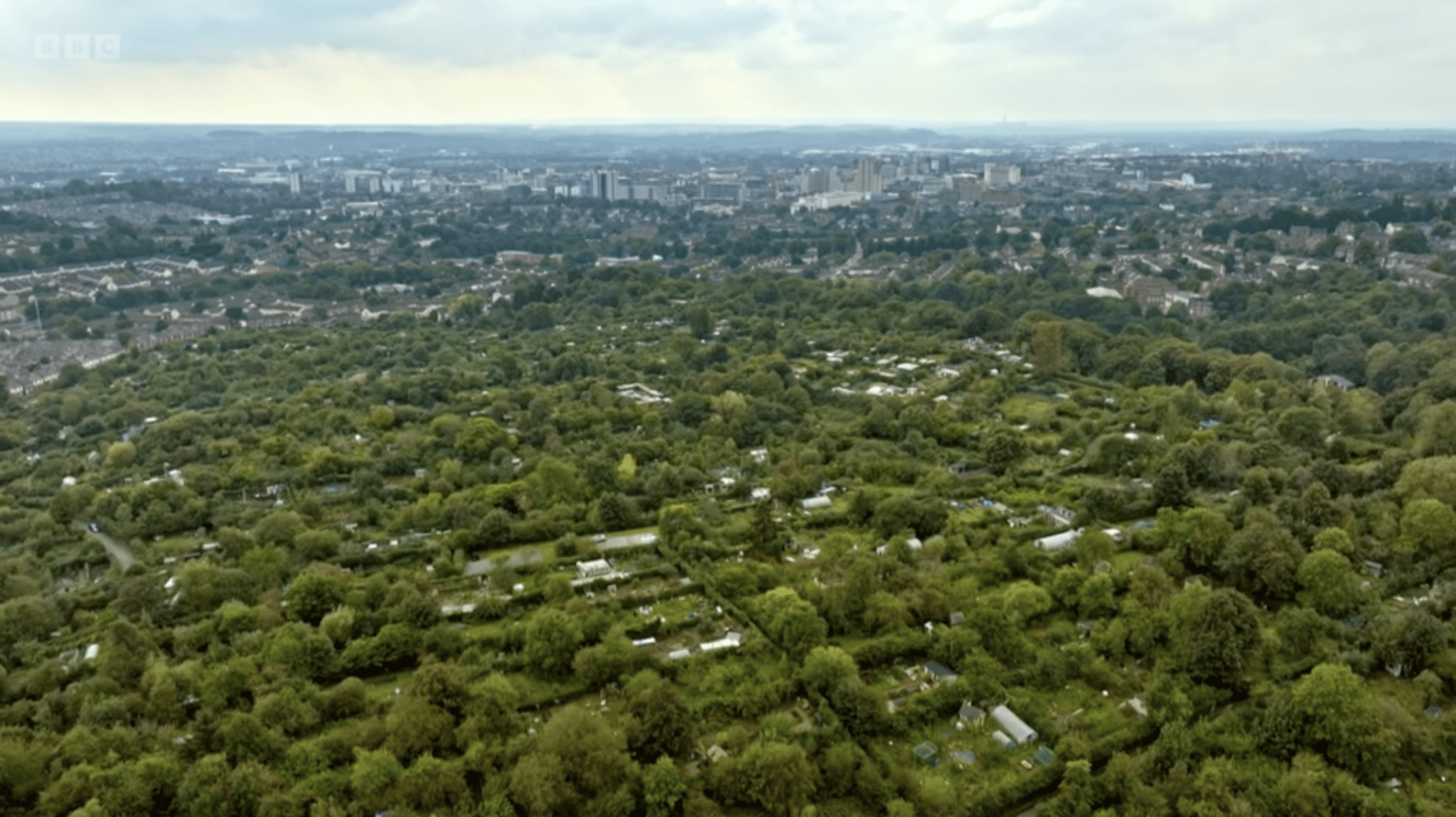
St Anne’s Allotments in Nottingham is a 75 acre site with 700 plots. Much like the site I’m on each plot is surrounded by hedges. In the article Monty comments on the charm of the hedged lanes with sunken doors and how it creates a mystery and magic.
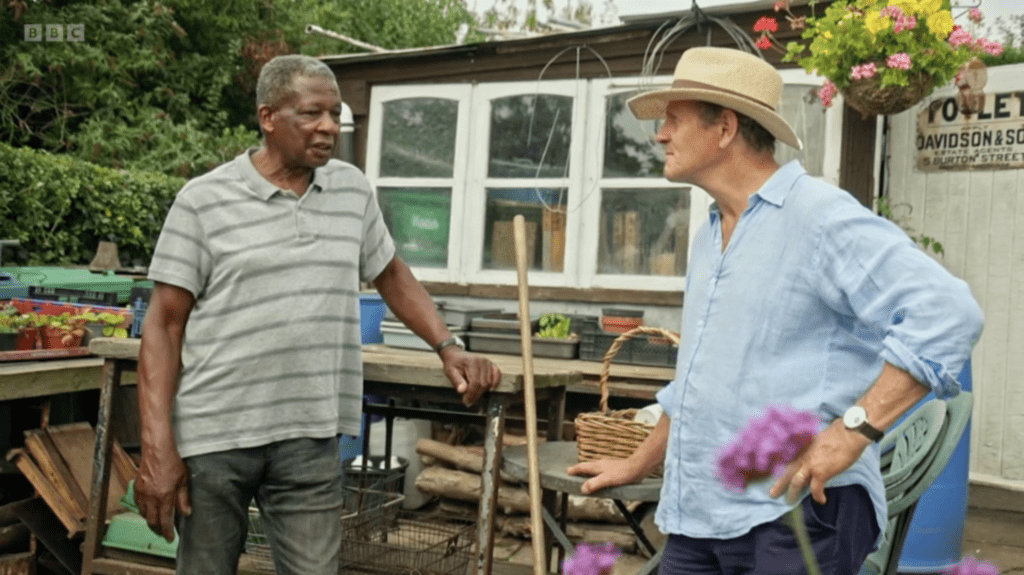
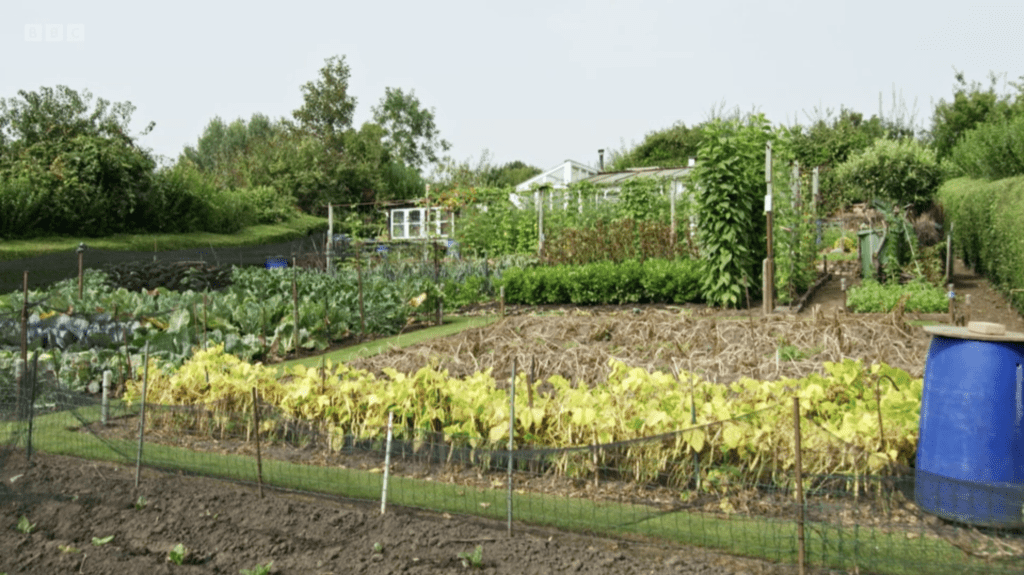
Lawrence Edwards has had his plot for 35 years. Monty comments on the quality of his vegetables and says his cabbages are “trophy”. Lawrence responds, “The thing is if I give it to my friends they always make a joke that it’s too big!” He spends four or five hours a day at his plot as he loves gardening. When Monty says Lawrence is clearly good at it, Lawrence responds “No, no. I’m just lucky!” while laughing which is a common retort at my site too when you praise someone’s flowers or veg 🙂 Lawrence goes on to say “It’s the love of it isn’t it? If you do to the best of your ability.” Monty asks if he thinks there’s such a thing as an archetypal British garden, Lawrence says “Mm, I think there is, but I think you just create something for your own self isn’t it?”
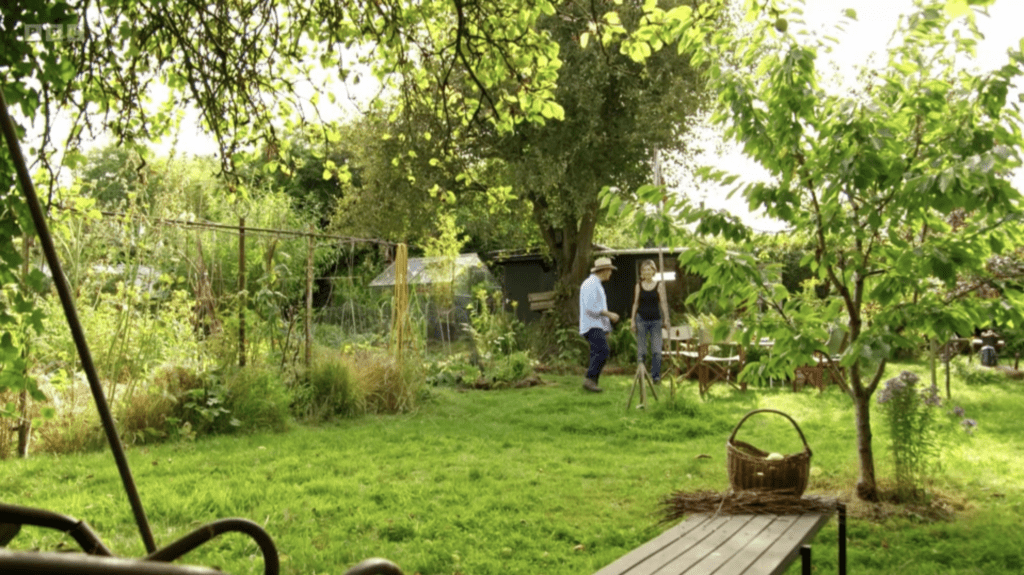
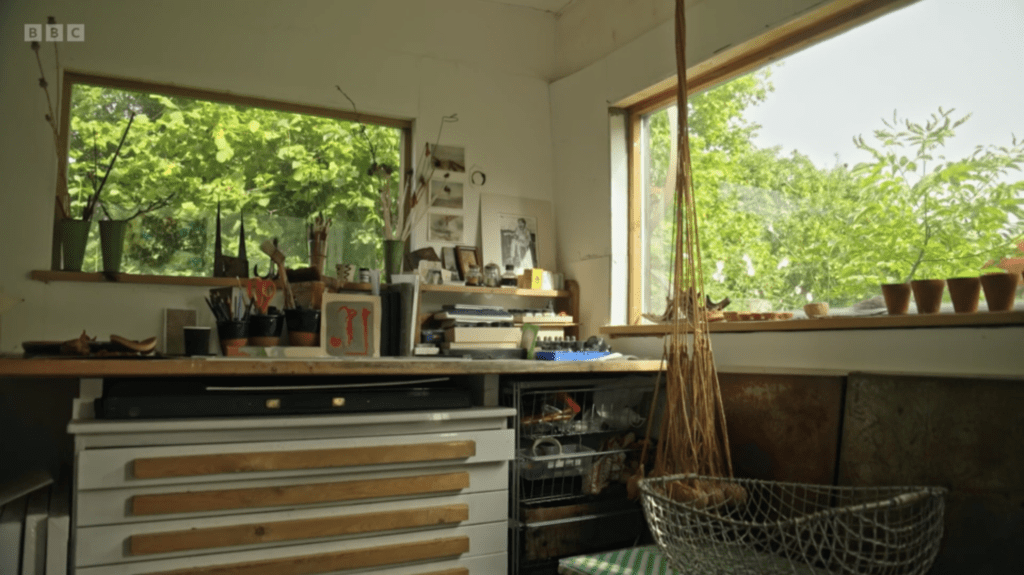
Val Turton is an artist that runs her plot as a communal space. During the covid pandemic while she was often out to work she let her friends use her studio shed. “Otherwise it would feel really decadent, because it’s a huge plot and lots of people want outdoor space.” She describes that at first it was just her friends, but then they invited people they knew would appreciate the space too and the community grew. Her son rebuilt the shed as a studio space for her, the plot has fruit trees and places to sit as well as a shared greenhouse.
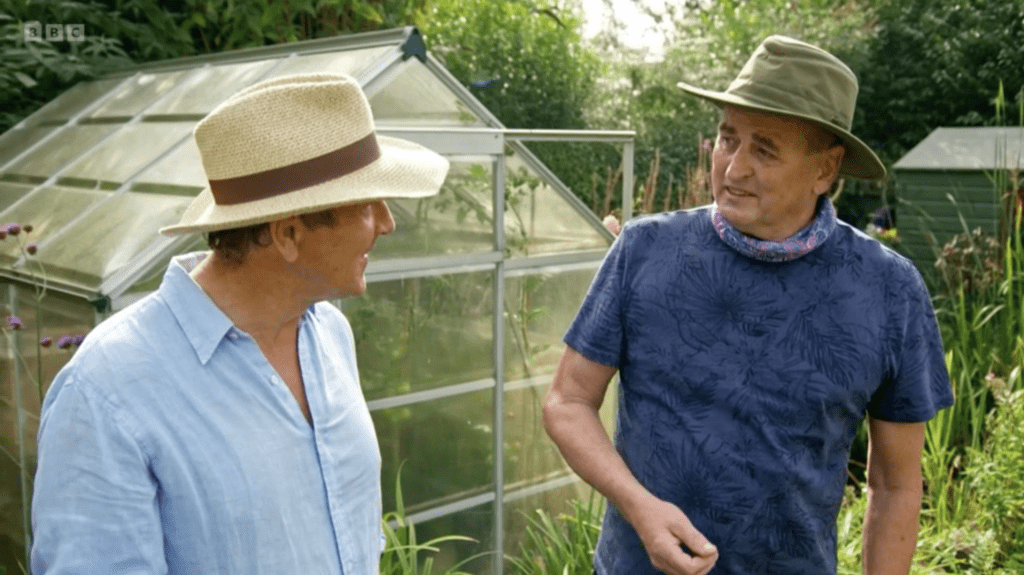
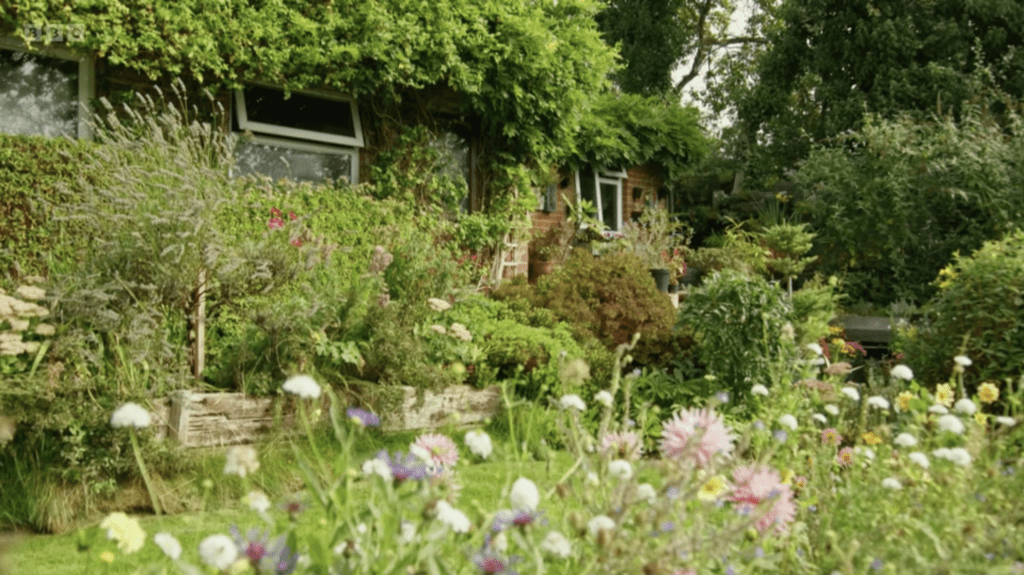
The last tenant interviewed is Tony Taylor with his first and only garden. Monty exclaims that he’s speechless on first entering the garden. Tony started with a broken brick shed, shattered glass everywhere and a clay slope with no features. “I wanted a typical cottage garden. I live in the city centre in a high-rise block. And there’s no garden on the 12th floor. I’d never picked up a spade in my life.” He comments on the trial and error of gardening, which he put down to his lack of experience but I think is much more universal than that. He has trained fruit trees, beautiful beds of cottage flowers, and climbing beans.
At the end of the segment Monty says: “It’s also very moving because it’s an act of faith that you can create a garden that nurtures you.”
This allotment site is visibly in an urban area with high-rise tower blocks of homes visible in the near landscape. These interviews only give tiny snippets of what allotments mean to people but I appreciated the focus on allotments all the same.
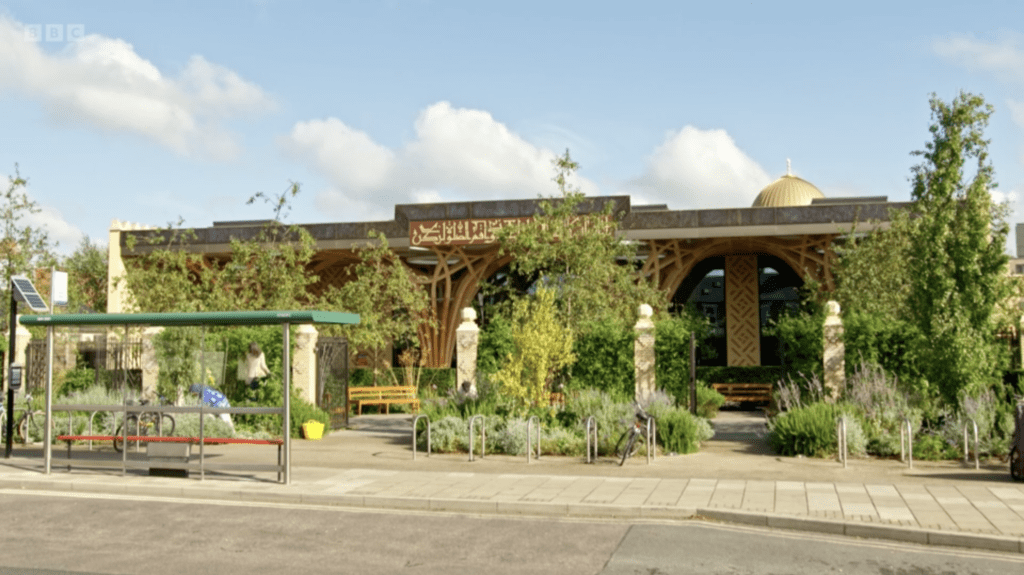
Later, in the same tv episode Monty visits Cambridge’s new Central Mosque, an eco-friendly designed building and open garden. This blew me away with the vision and scope of it. It was a complete joy to see.
They have a formal garden at the front which is based on the Paradise Gardens of the Quran. But instead of date palms there are crab apples and other familiar plants.
Nabila Winter, who has been closely involved with the mosque since its inception says: “When we purchased the site we had a meeting with local residents. They had questions for us: will there be gardens, and can we come? And we were so happy with those because well, yes, yes, yes. Because this is a very residential area and we love gardens.”
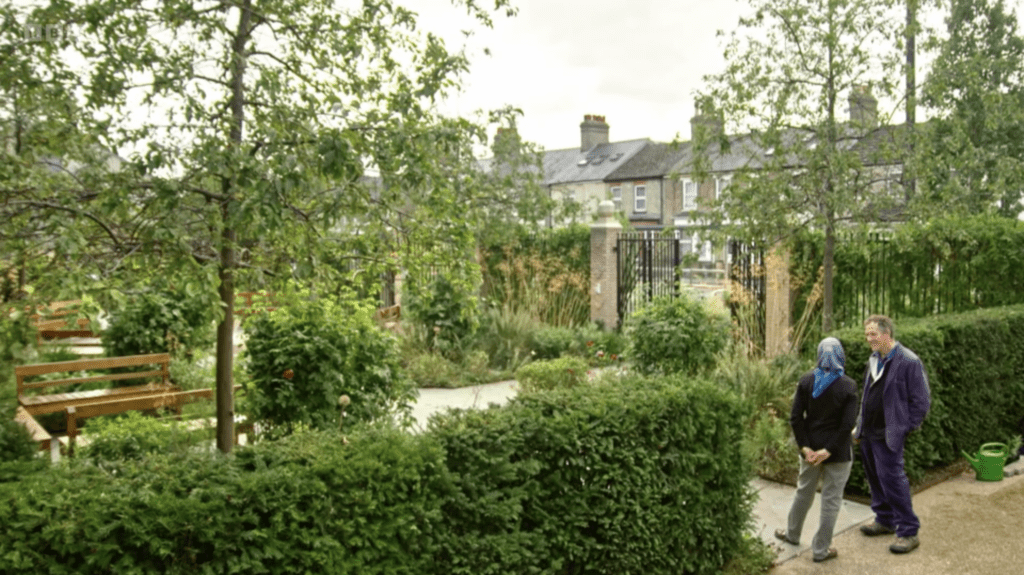
Monty asked how do you deal with vandalism and nuisance behaviour? Nabila says “That’s really our garden team. Because they’re here every Wednesday morning looking after it. Picking up the rubbish, weeding, cleaning. So we’ve been very aware of the fact that we need to look after what we have. It’s revitalised this end of Mill Road. It has exceeded all of our expectations. It’s become a sort of tourist hot spot – they come in their coach-loads now, which we hadn’t anticipated.” Monty asks is that a good thing. Nabila answers: “It’s a wonderful thing! It’s what we want, and we hope it will continue because gardens are a service. This is a charity, and it’s there to give back to the community.”
With a bus stop right next to it, homes on the other side of the street and the plants opening out on to the public pavement, you can see how closely entwined it is with the resident community.
Much of the programme focuses on the fashions of middle class gardens which I’m less interested in (although I like seeing methods to planting schemes and being introduced to new plants). One of the historic gardens featured took 100 men 10 years to complete, which is an obscene indication of wealth. I much prefer gardening programmes that show the joy of ordinary folk creating their own slice of paradise, whether individually like the allotment tenants or communally like at Mill Road Mosque.
Also. It’s been nagging me to try to capture some of the joy and wisdom of my fellow allotment tenants at some point. I’d like to capture how allotments provide food security, mental health therapy, and vital access to green spaces that many otherwise would not have. The continuing financial insecurity of local governments in the UK has made allotmentors everywhere seemingly anxious about whether councils will seek to change the use of land for allotment sites (to sell on to raise funds). Focusing in on the good in the now and reflecting that back at people always feels a worthy cause, and might help argue for why our and any allotment site is a necessary community service. I hope to blog community garden spaces I visit in person too, I post them on mastodon every now and then but if there why not here!